
Key Takeaways:
- A website contributes to search visibility while helping to prevent AI hallucinations that mislead guests and misrepresent your business.
- 74% of restaurateurs worry resale sites block direct communication with customers.
- Crumbl’s high-quality website visuals are the focal point of its marketing efforts.
A restaurant’s website acts as a digital business card that no restaurant today can afford to be without.
It’s a credibility engine, a marketing tool, and a direct line to guests all in one, driving search visibility, streamlining bookings, and strengthening your brand at every point.
Let’s dive into how a strong website transforms casual interest into loyal patrons.
Helps Build Your Restaurant’s Credibility
A professional website immediately elevates a restaurant’s credibility.
While the discussion around “website vs. social media” is hardly new, the core insight remains surprisingly durable: people trust businesses more when they have a dedicated website.
A Verisign study reveals how strong that expectation already was a decade ago, with 86% of customers expressing a preference for businesses with a website and perceiving it as more credible than social media.
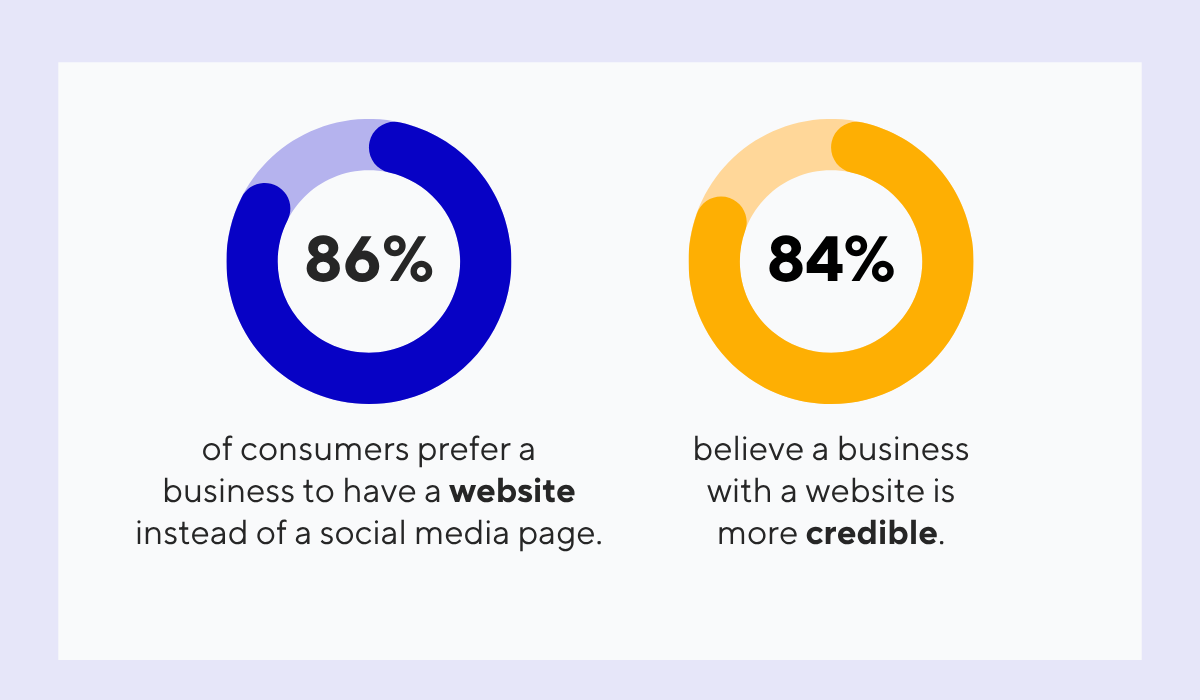
Illustration: Tablein / Data: Verisign
For restaurants, this expectation is even more pronounced.
Diners almost always Google a place before deciding whether to visit, and when that search lands you on (an often neglected) social media page, rather than a website, it sends an unintended message: this business may not be reliable or up-to-date.
That perception hasn’t softened over time.
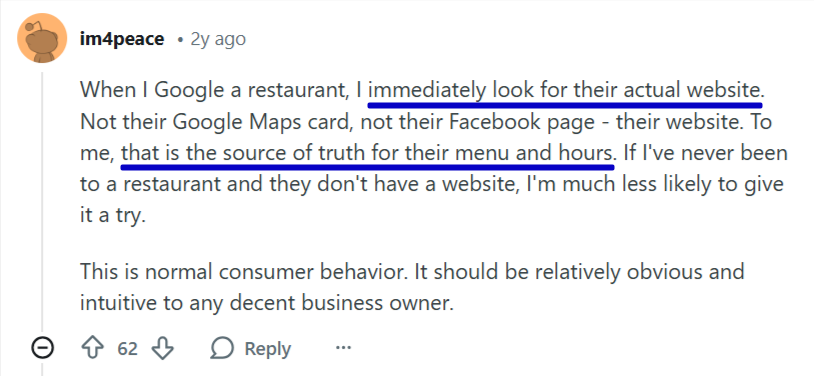
A 2023 Reddit discussion captures how diners still rely heavily on websites to validate whether a restaurant is worth trying.
One user notes that the website is considered the source of truth for menu and hours, and if they hadn’t visited previously and there’s no website, they probably wouldn’t give it a try.
Source: Reddit
Another commenter reinforces this point by noting how frustrating it is to have to navigate Instagram feeds just to find basic details, especially when it might not even load properly without logging in.
All in all, the absence of a website slows your would-be guests down and complicates the entire discovery process.
As for the benefits, credibility matters across all segments, from casual eateries to fine dining, but it’s beyond crucial for emerging restaurants working to establish their identity.
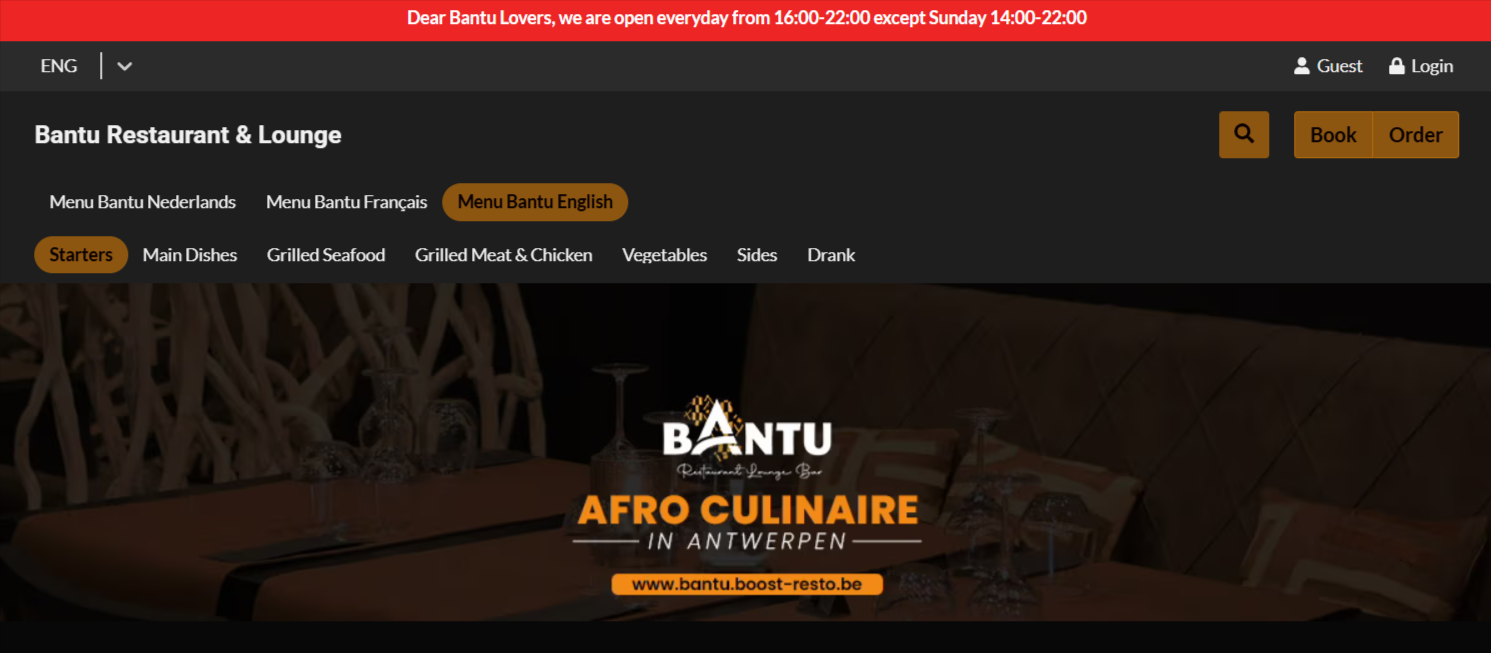
Consider Bantu Restaurant and Lounge in Antwerp.
Opened in 2024 and still accumulating reviews, the team prioritized launching a clean website to clearly showcase menus, photos, and contact details to ensure that first-time visitors would have a reliable reference point.
Source: Bantu
And while this reliability contributes to positive first impressions, it’s also about ensuring control.
When a restaurant doesn’t maintain its own website, platforms like Google, Tripadvisor, or Yelp become the default “truth," even when that truth is not rooted in reality.
One Google Support query highlights how one incorrect edit of a restaurant’s opening hours chased away guests, who were most likely confused and disappointed because they would come to a closed restaurant.

Source: Google Support
What’s worse, even their own submitted correction was rejected, so it’s unclear when and how this issue was ultimately resolved.
All in all, a good website signals professionalism and legitimacy, so be sure to treat it like your digital storefront, keeping it open and always accurate and under your control.
Improves Search Visibility
Since most diners discover new restaurants through search engines, improving search visibility is a must for any establishment, and websites can help you do exactly that.
Potential guests typically use “near me” queries that filter results by geography so they can find businesses in a specific area.
Whether someone types “sushi places in Brooklyn” or “Shibuya brunch,” they’re signaling clear intent: they want something close, relevant, and available now.
These local search queries have grown steadily, with 2021 data showing that 42% of millennials are very likely to visit a business after finding it through a local search.
But despite this clear opportunity, 58% of businesses still haven’t optimized for local SEO.
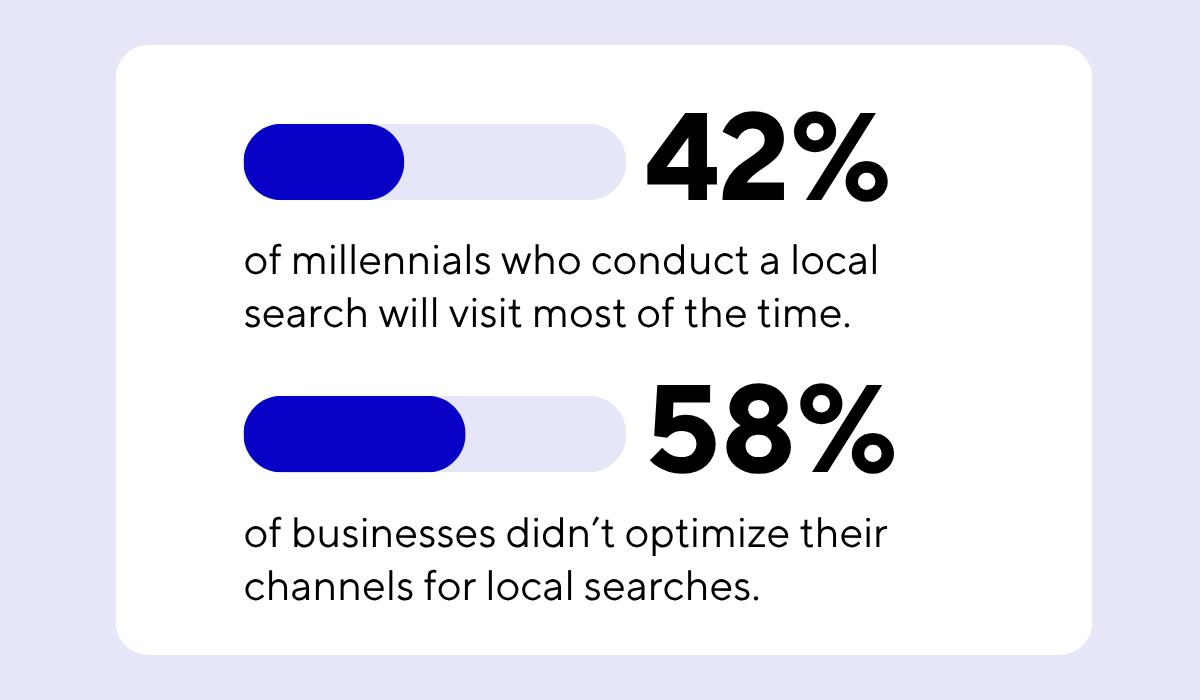
Illustration: Tablein / Data: Review Trackers
This means that they’re effectively invisible during the exact moment customers are ready to visit.
So, how does your restaurant website fit into all this?
It’s simple: a well-structured, SEO-optimized website helps answer these questions in seconds and increases the likelihood that your restaurant appears in local results.
As Business Development Lead, Shubathra Devi, notes, showing up for relevant search intent works as a continuous source of organic traffic for restaurants that invest in SEO.
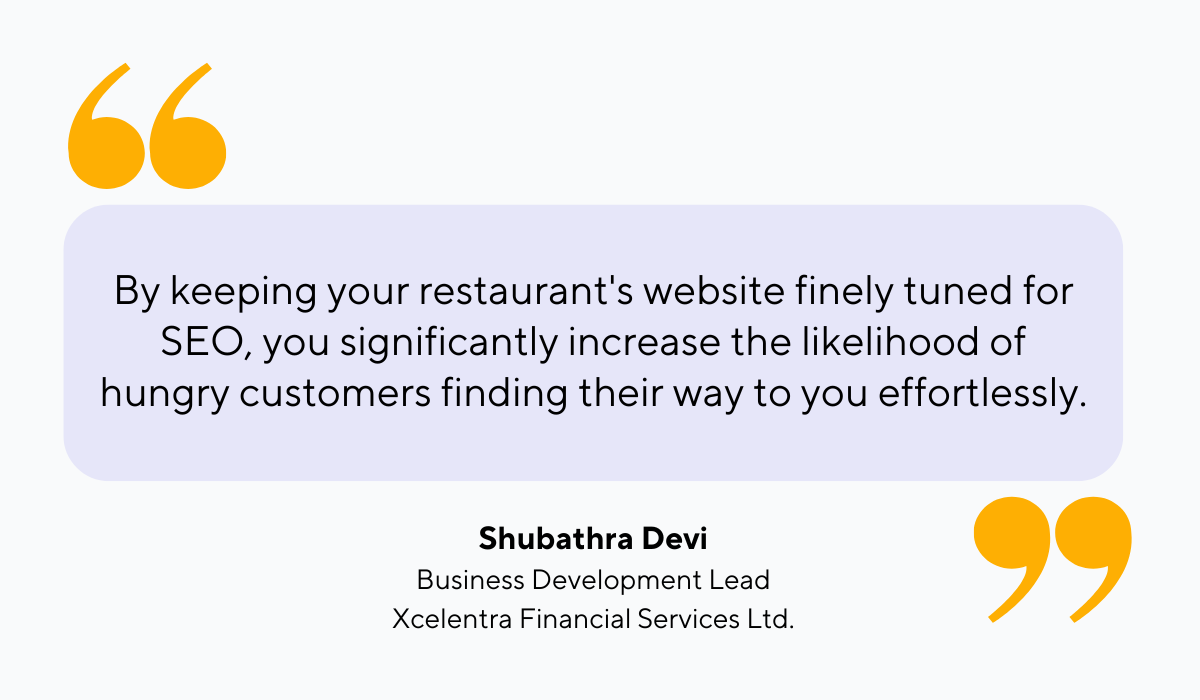
Illustration: Tablein / Quote: LinkedIn
To capture this traffic, your website needs to reflect how diners actually search.
You can start by incorporating relevant, naturally phrased keywords, covering your cuisine type, neighborhood, service style, and menu highlights.
A recent Forbes analysis points to a broader industry shift back toward local marketing strategies, underscoring how critical it is for restaurants to own their search footprint.
And it’s clear that three things consistently move the needle:
- A complete and accurate Google Business Profile
- Clear location-based keywords throughout your site
- A steady flow of positive customer reviews that reinforces credibility
Make them your priority, and you’ll see the results quickly enough.
Beyond visibility, there’s another emerging reason to maintain accurate online information, and that’s AI-generated search results and summaries, which are not always reliable.
One recent example involved Stefanina’s Pizzeria in Missouri, where AI tools invented “special deals” the restaurant never offered.
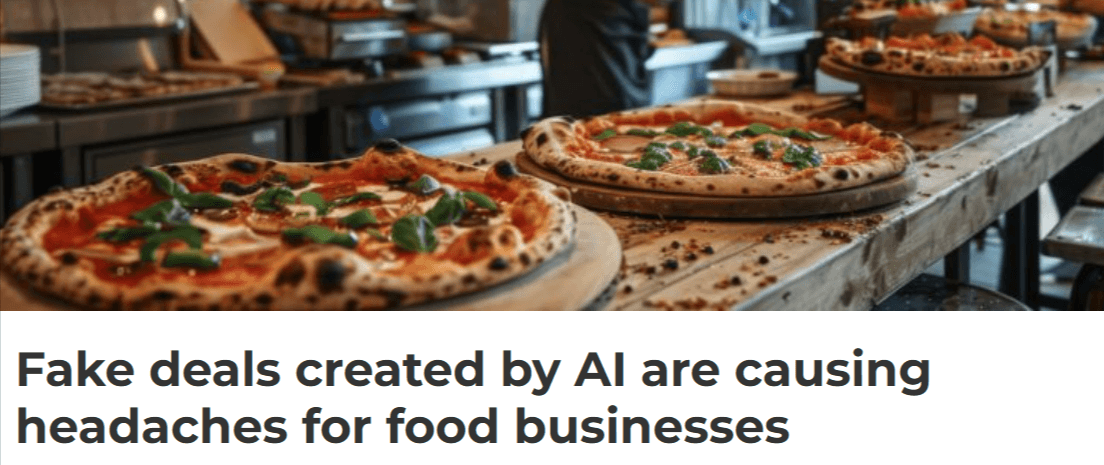
Source: Food Chain Magazine
How exactly does this happen?
AI relies on patterns in its training data, so when verifiable information is missing, it fills the gaps on its own, creating the infamous hallucinations.
As Stefanina's manager, Denise Raeman-Gannon explains, these false specials are a major problem because they’ve been leaving customers confused and staff scrambling to correct expectations.
There’s no guaranteed fix, but you can reduce the risk by leaving a clear, authoritative digital trail.
That way, your website becomes the primary reference point and most powerful discoverability tool, ensuring you’re found accurately and consistently wherever people search.
Enables You to Showcase Your Food
A website provides the ideal space for you to display high-quality food photography that grabs attention and sparks appetite.
Visuals often influence dining decisions, sometimes even more so than the price or location, simply because people form quick emotional impressions based on what they see.
And there’s a whole science and a mountain of research behind that.
In her thesis on food photography, Maria Monica Mbuka explains how deliberate choices in color, angles, and plating can dramatically shape a viewer’s expectations of flavor and quality.
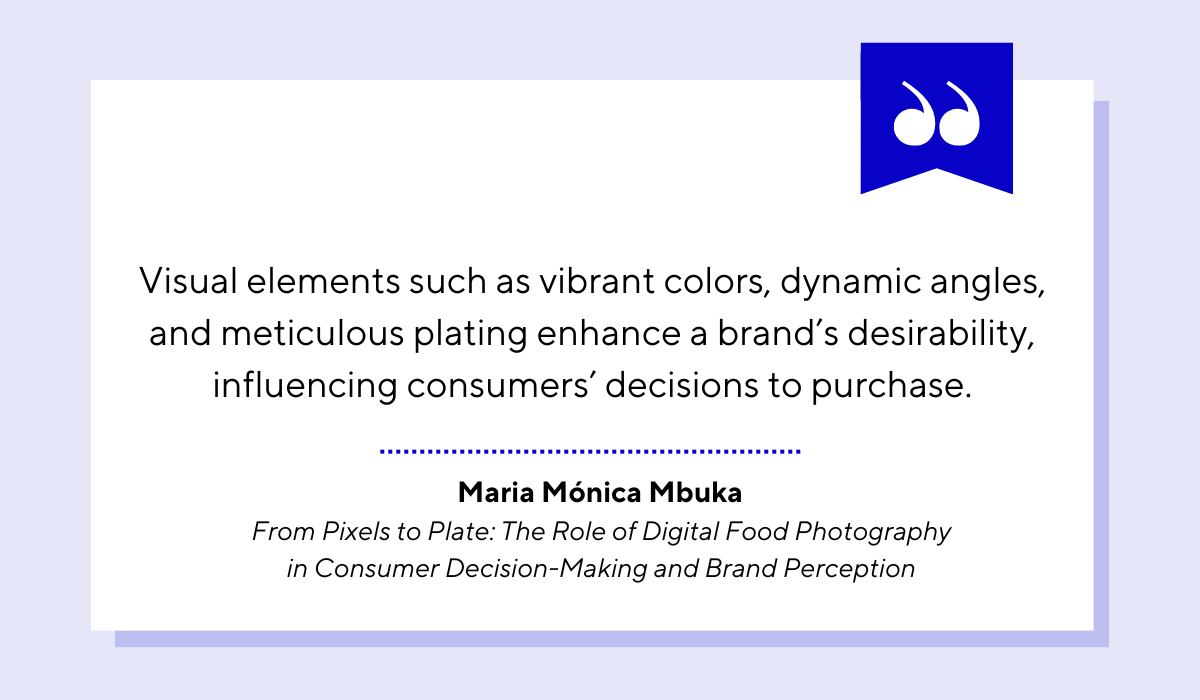
Illustration: Tablein / Quote: UCP Repository
And when a restaurant website features such carefully crafted imagery, guests can explore your best dishes in a focused, distraction-free environment.
Unlike with social platforms, you don’t have to battle algorithm-driven feeds or the constraints of vertical formats to get that maximum visual effect.
Just think back on how Instagram caused quite a stir recently when they rolled out a new vertical feed, with users complaining it disrupted their meticulously planned and executed feeds.
But on a website, that control is entirely yours.
Full-width banners, curated galleries, animations, or subtle motion effects can all be tailored to reflect your brand rather than a platform’s evolving design rules.
This freedom becomes even more powerful when paired with a strong visual identity.
One notable example is Crumbl, the fast-growing dessert chain that has taken the U.S. market by storm.
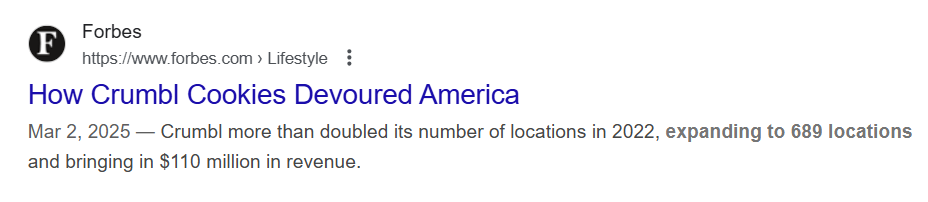
Source: Forbes
Crumbl built its early momentum on Instagram and TikTok, where its perfectly styled cookies and weekly drops went viral.
Today, it advertises across 14 different channels, and this diversification helped drive a 55% increase in sales.
However, to make their omnichannel strategy a success, Crumbl needed a strong visual foundation that brings everything together: their website.
The homepage opens with a dynamic header video showcasing their newest and most iconic treats.
Rich textures and melting chocolate are captured in a way that a single still image can never fully convey.
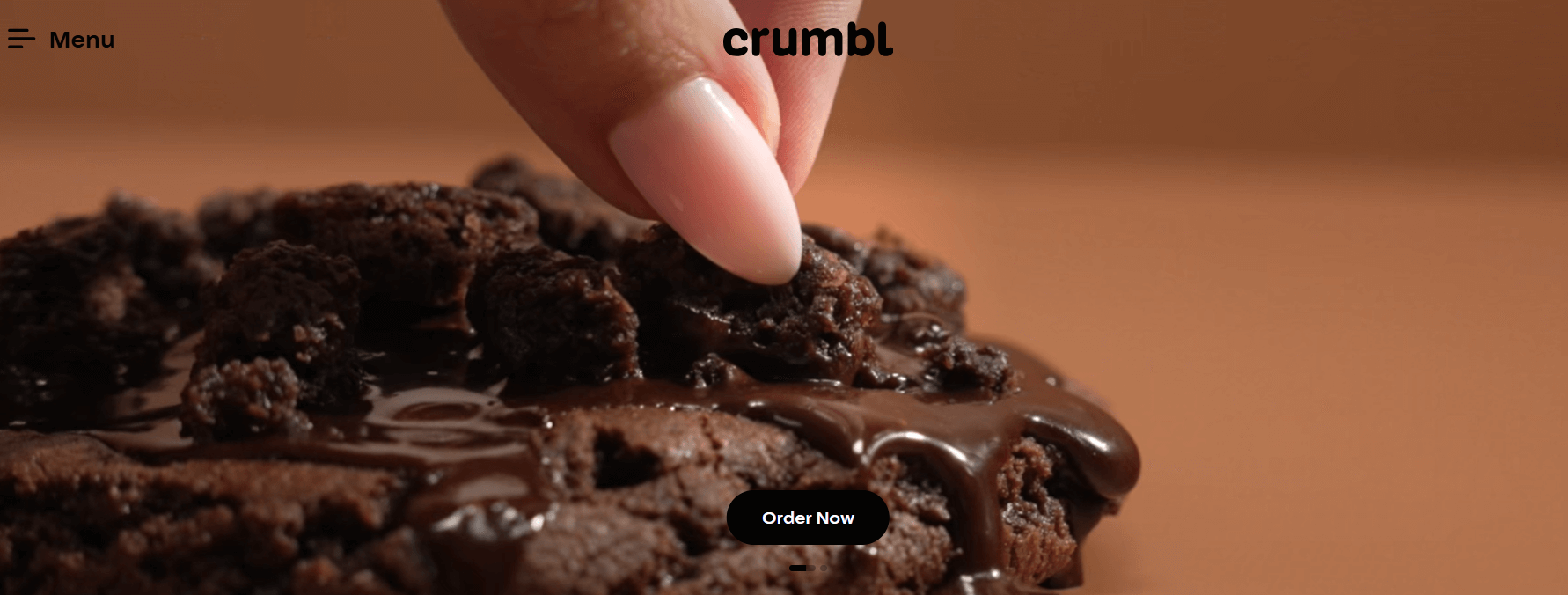
Source: Crumbl
These visuals mirror the brand’s social content, but the website’s format allows them to expand beyond vertical reels or square posts.
The layout is flexible, immersive, and purpose-built to sell the experience.
Of course, compelling food visuals don’t always require video production budgets.
Kanpai Izakaya, a Japanese street-food spot in Oslo, takes a simpler yet highly effective approach by showcasing close-up shots of its signature dishes.
Think crispy textures, vibrant toppings, and even steam rising off the bowl.

Source: Kanpai Izakaya
The key takeaway is this:
A visually engaging website will make people hungry long before they walk through the door, giving them that final push to book a table.
Streamlines Table Reservations
A website makes the booking process drastically simpler for both guests and restaurant staff.
When reservations run smoothly, there are fewer calls during service, and special requests are noted automatically.
Most importantly, the clearer and more intuitive the starting point, the more likely it is that the guests will complete the booking and be off to a good start experience-wise.
But why does the booking system need to be part of your website?
Because every time you send guests off-site to complete a reservation, you lose control over the experience.
This has become a much bigger concern in light of emerging issues highlighted by industry research.
According to the National Restaurant Association, the black-market resale of hard-to-get restaurant reservations has grown across major U.S. cities in recent years.
And the reason why 74% of their survey respondents consider it so worrying is that it often results in impeded communication with diners.
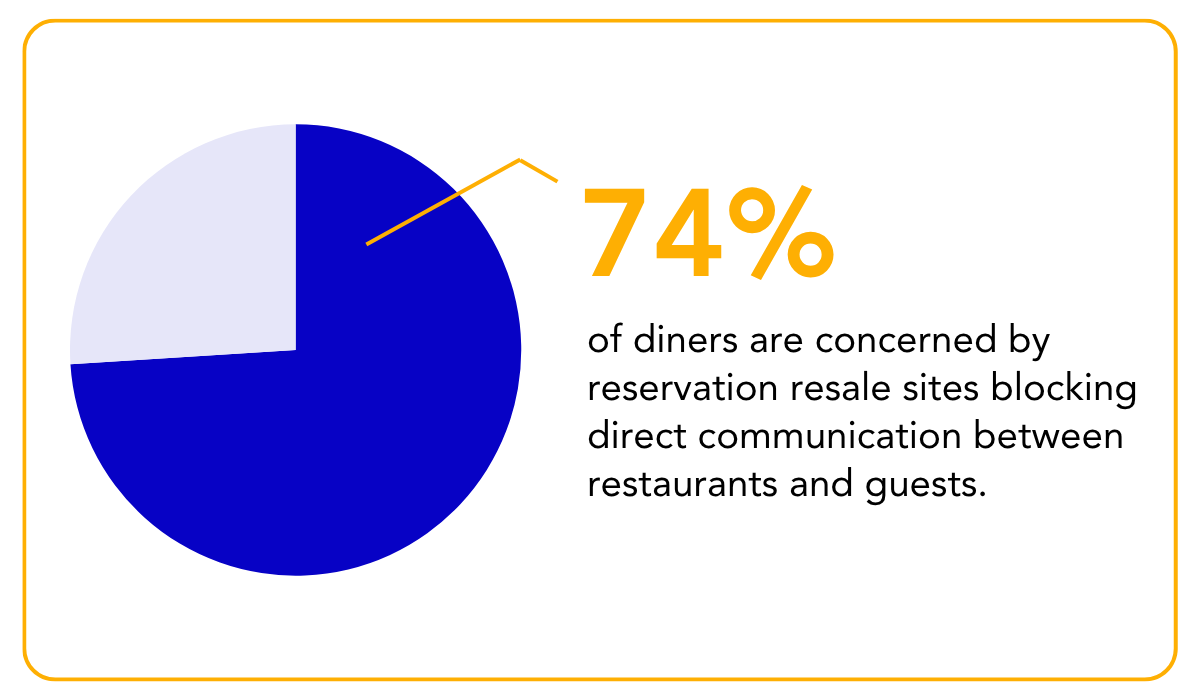
Illustration: Tablein / Data: National Restaurant Association
When that communication breaks down, so does service.
Guests are more likely to miss pre-visit confirmations, allergy clarifications, or policy reminders, which ultimately leads to misunderstandings that affect the experience.
Expert in restaurant, beverage, and hospitality branding, Joseph Szala, sums this up neatly:
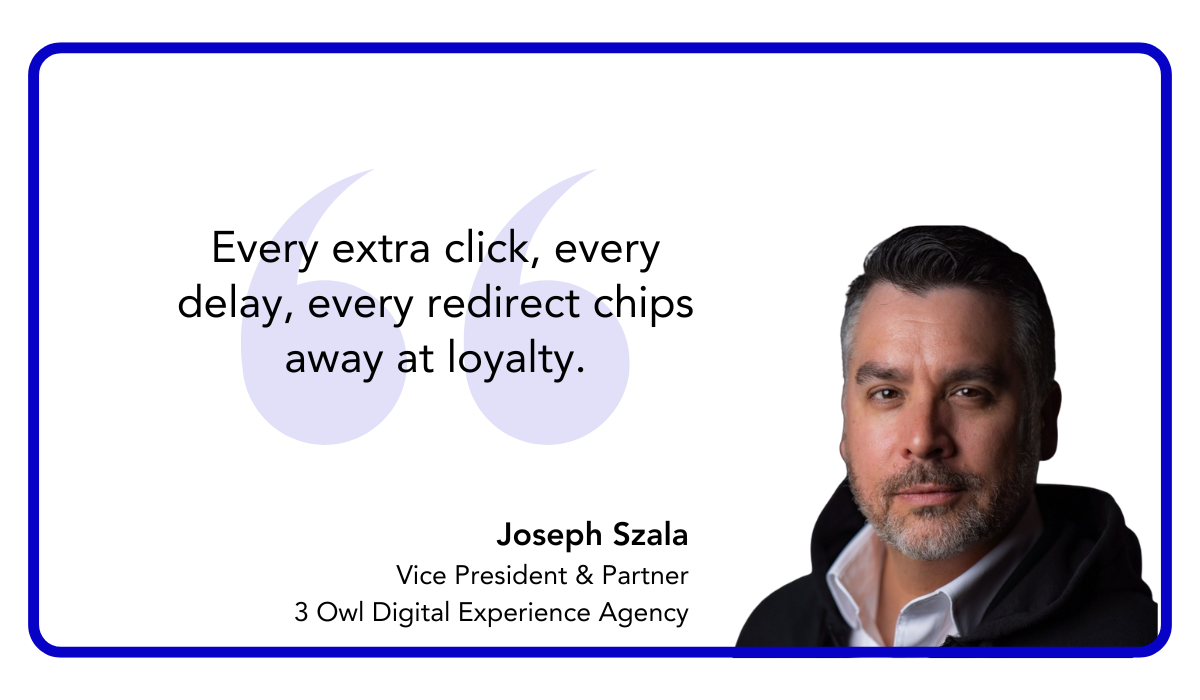
Illustration: Tablein / Quote: LinkedIn
In other words, third-party intermediaries can prolong and distort the guest journey, introduce confusion, and ultimately push away once-loyal diners.
This is why simplicity and ownership matter so much, and one surefire way of securing both is by streamlining table reservations with dedicated software.
A clear, user-friendly booking system embedded on your website effectively reduces phone calls, prevents double bookings, and keeps the full experience in your hands.
Tools like Tablein’s customizable booking widget enable restaurants to effortlessly accept and manage reservations directly from their site while collecting crucial details such as date, time, party size, and special requests.
Guests can also see available payment integrations and rely on predefined tags to quickly note their preferences.
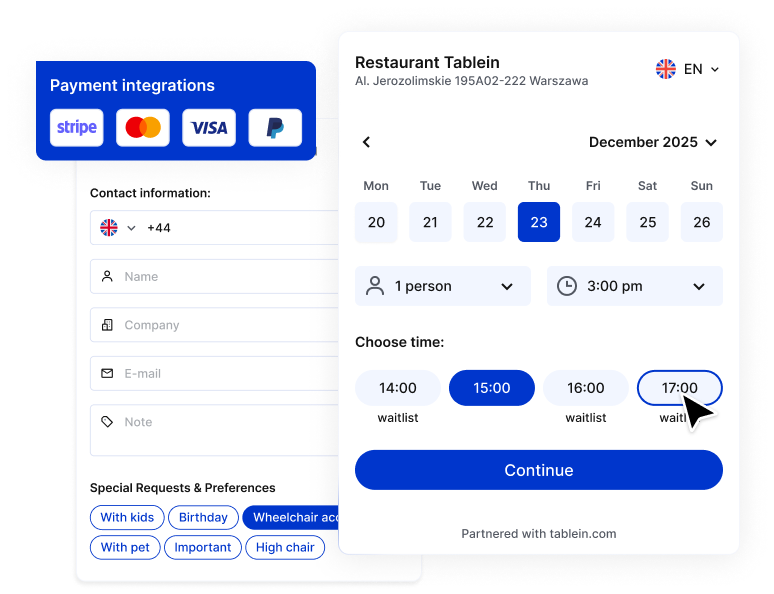
Source: Tablein
The booking widget is easy to integrate and compatible with website builders, but not at the expense of any features—you can extensively tailor the widget’s look and feel.
From preset themes to fully customized color schemes, background images, and venue photos, Tablein ensures your reservation process matches your restaurant branding.
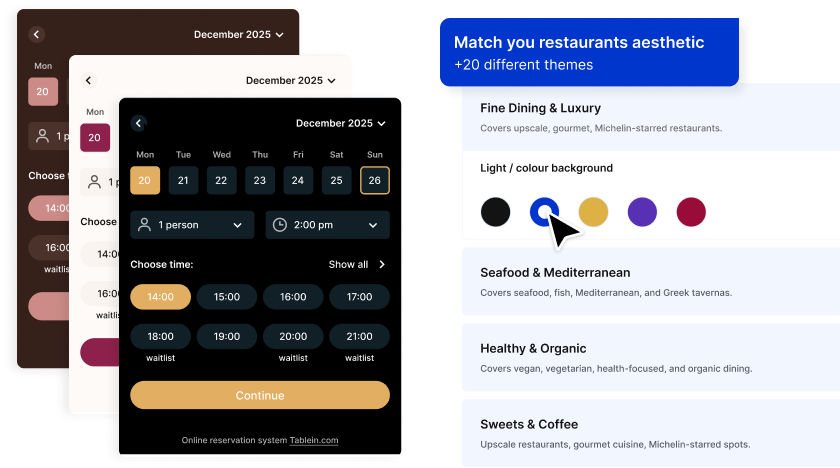
Source: Tablein
This consistency strengthens your brand and sets the stage for a superior guest experience, but more on that in our final section.
To sum up, streamlined table reservations are a must, and they’re safest when they’re stored on your site.
Provides a Competitive Advantage
In a crowded market, restaurants with strong websites stand out from those that rely solely on social media or third-party listings.
As we’ve already established, a well-designed site gives owners full control over their visual identity and customer experience, but it’s also a vital element in crafting a unique narrative.
Michael White, CEO of the digital marketing agency Cloud Mellow, explains that investing in storytelling on your website translates to more effectively communicating your values, personality, and key offerings directly to potential guests.

Illustration: Tablein / Quote: The Creative Momentum
While branding is informed by aesthetics, its impact is felt through a strategic advantage.
Restaurants can leverage their website to highlight signature experiences, whether it's tasting menus, private dining, or specialty events.
At the same time, they’re differentiating themselves from competitors and establishing authority in the local dining scene.
Let’s take a closer look at Antico Mulino, a family-owned restaurant in a small Italian town that has the best and most reviews among all nearby options.

Source: Google Maps
The common factor? The other establishments lack dedicated websites.
While the website isn’t the only contributor to this reputation, it helps the owners introduce the Antico Mulino establishment as a traditional, locally sourced, family-operated business.
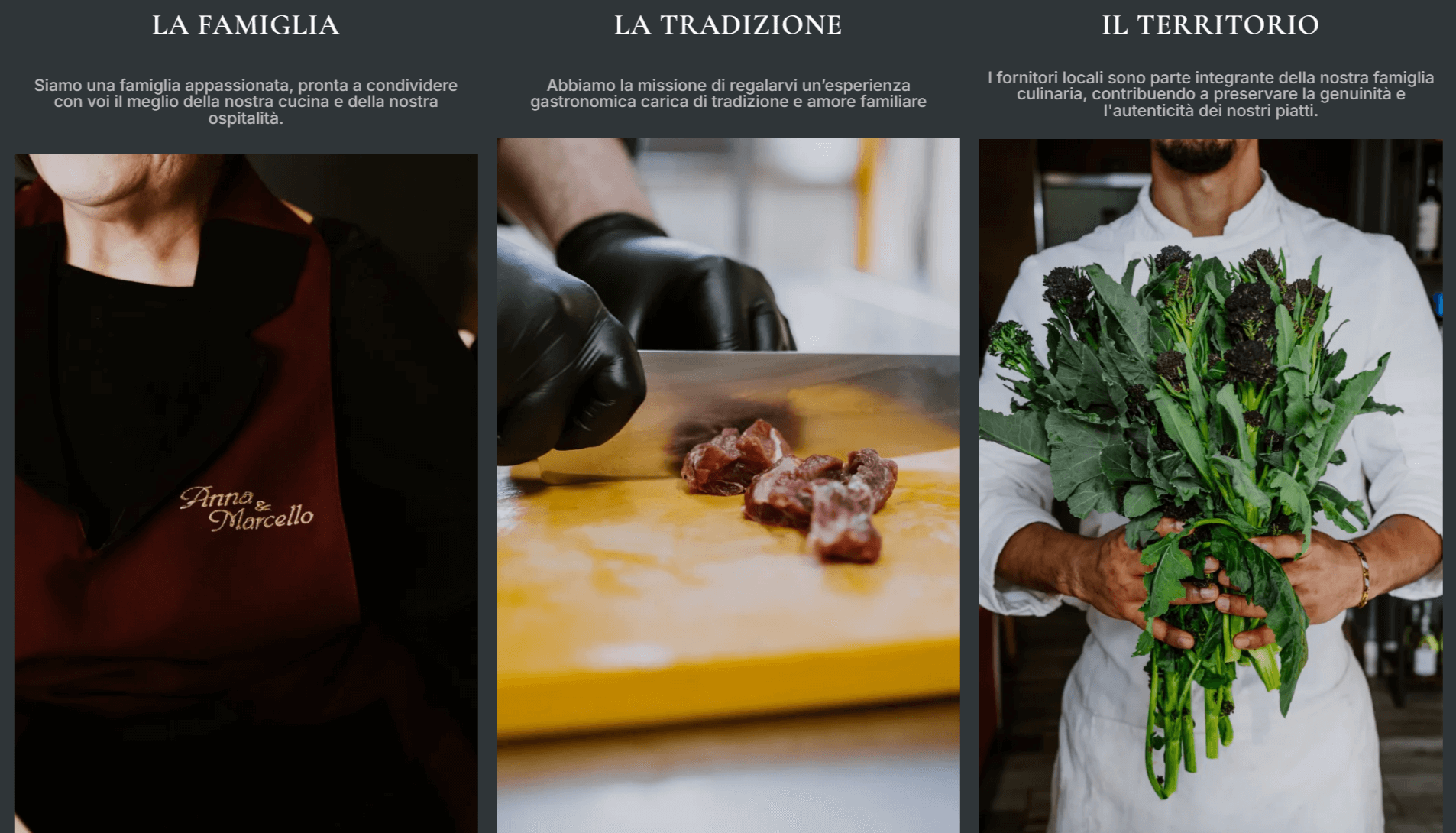
Source: Antico Mulino
And emphasizing authenticity and heritage is something that appeals to both tourists and locals alike.
In larger, more competitive markets, crafting a compelling narrative is even more important.
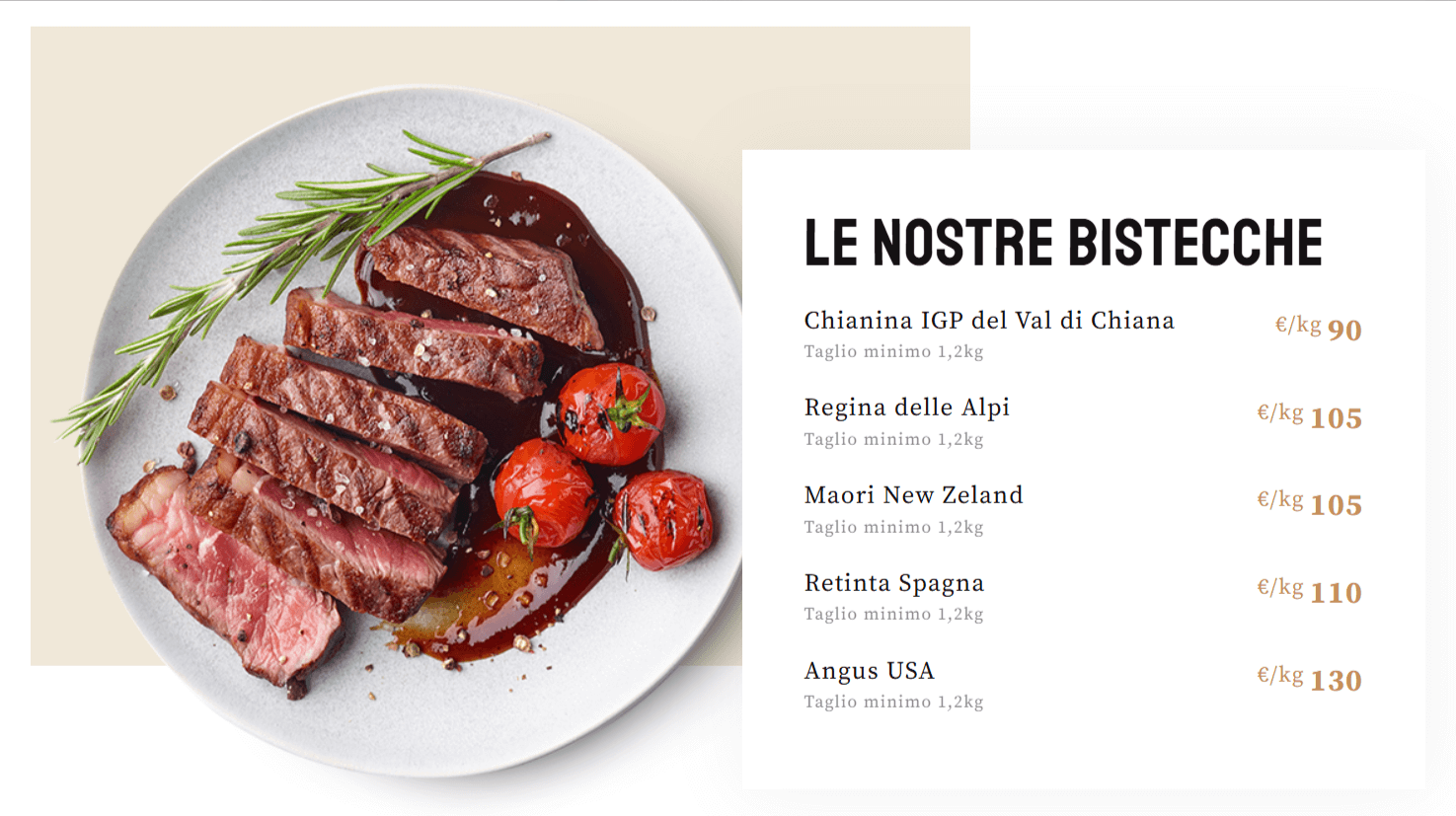
For instance, the Steak Museum in Florence leverages its website to celebrate Tuscan steak culture.
The header and the navigation menu already offer a preview of what to expect, leading to more detailed entries on specific types of meat that diners can try and savor.
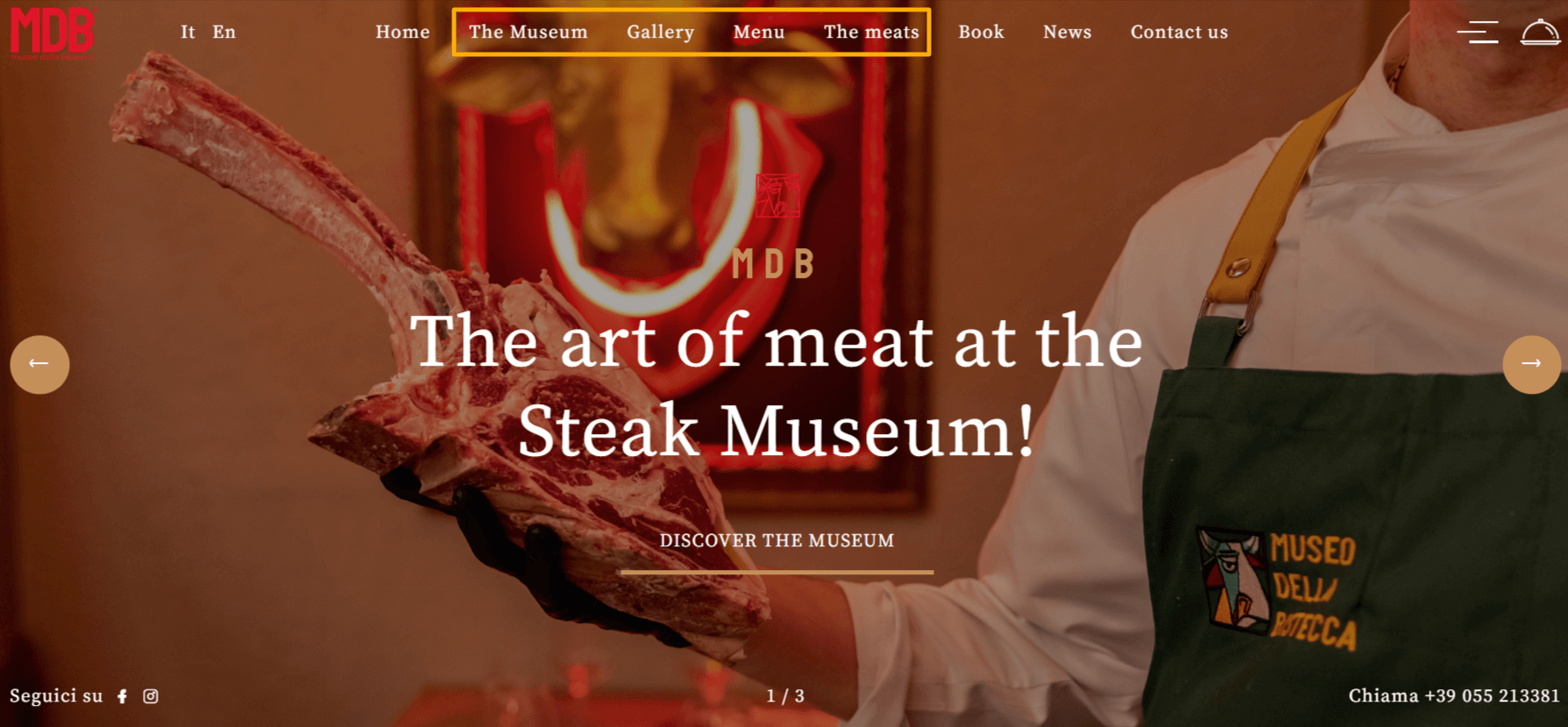
Source: Steak Museum
Every image, menu item, and story element is curated like a museum exhibit, presenting detailed visuals of different cuts alongside a comprehensive menu with transparent pricing.
Source: Steak Museum
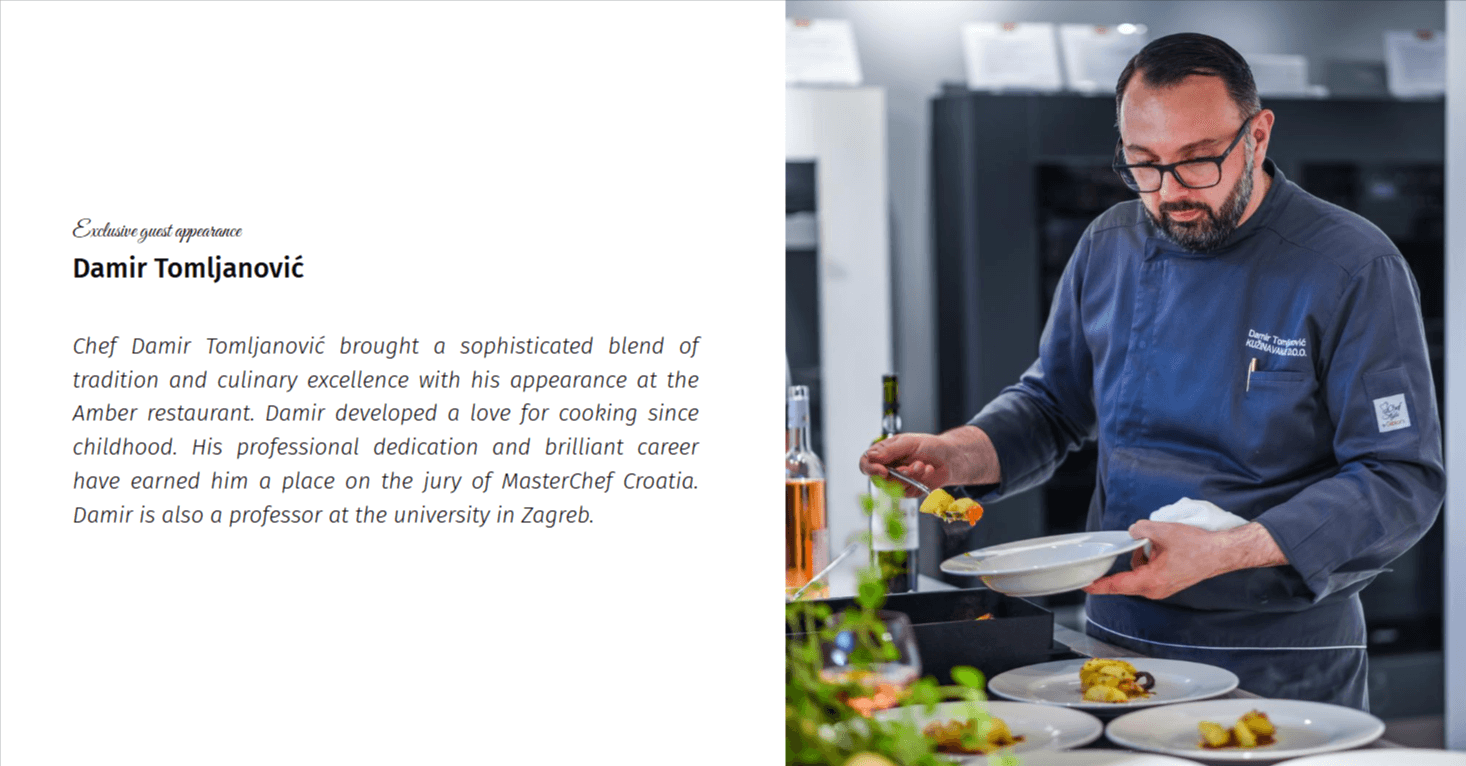
Another effective strategy is highlighting chefs who are associated with your brand, whether permanently or temporarily.
Amber restaurant, part of the Apeiro Hotel in Sarajevo, uses its website to spotlight a famed guest chef, creating excitement and exclusivity while giving visitors direct insight into the culinary talent behind the experience.
Source: Apeiro Hotels
Whichever angle you take, a dedicated website allows you to communicate it more clearly and consistently than any social feed or third-party platform.
Remember, a lasting digital presence will give you a measurable edge over competitors.
Conclusion
Building a professional, user-friendly website may seem like a daunting task, but every minute and dime pays off.
By listing essential business information, featuring aesthetic shots of your food, and capturing reservations on your site, you’re quickly building your discoverability and competitiveness.
Prioritize your own digital presence, integrate a seamless booking system, and make sure your story, cuisine, and brand shine.
Remember, your website is the key to growing your restaurant with confidence, so if it’s not online yet, start now!
Share this
5 Ways to Increase Restaurant Sales
Why You Should Use a Template for Your Restaurant Website