---
title: 5 Benefits of Social Media Marketing for Restaurants
description: Wondering if social media is worth it for your restaurant? Discover five key benefits that can grow your brand and reach.
image: https://www.tablein.com/hubfs/image7-Feb-05-2026-11-08-32-7870-AM.png
---
**New:** Version3.0 beta available: [TRY HERE](https://admin.tablein.com)
[Login](https://admin.tablein.com/) [Try it free](https://www.tablein.com/signup)
[](https://www.tablein.com/)
- [Features](https://www.tablein.com/table-booking-system-features)
- [Solutions](https://www.tablein.com/table-booking-solutions)
- [Individual restaurants](https://www.tablein.com/table-booking-solutions#individual_restaurants)
- [Restaurant groups](https://www.tablein.com/table-booking-solutions#restaurant_groups)
- [Hotel restaurants](https://www.tablein.com/table-booking-solutions#hotel_restaurants)
- [Bars, Pubs and Clubs](https://www.tablein.com/table-booking-solutions#bars_pubs_clubs)
- [Events, Weddings and Catering](https://www.tablein.com/table-booking-solutions#events_weddings_catering)
- [Membership Clubs](https://www.tablein.com/table-booking-solutions#membership_clubs)
- Resources
- [Blog](https://www.tablein.com/blog)
- [Pricing](https://www.tablein.com/pricing)
- [Contact](https://www.tablein.com/about-tablein)
- [Features](https://www.tablein.com/table-booking-system-features)
- [Solutions](https://www.tablein.com/table-booking-solutions)
- [Individual restaurants](https://www.tablein.com/table-booking-solutions#individual_restaurants)
- [Restaurant groups](https://www.tablein.com/table-booking-solutions#restaurant_groups)
- [Hotel restaurants](https://www.tablein.com/table-booking-solutions#hotel_restaurants)
- [Bars, Pubs and Clubs](https://www.tablein.com/table-booking-solutions#bars_pubs_clubs)
- [Events, Weddings and Catering](https://www.tablein.com/table-booking-solutions#events_weddings_catering)
- [Membership Clubs](https://www.tablein.com/table-booking-solutions#membership_clubs)
- Resources
- [Blog](https://www.tablein.com/blog)
- [Pricing](https://www.tablein.com/pricing)
- [Contact](https://www.tablein.com/about-tablein)
[Login](https://admin.tablein.com)[Try it free](https://www.tablein.com/signup)
# 5 Benefits of Social Media Marketing for Restaurants
[](https://www.tablein.com/blog/author/tablein)
[Tablein Team](https://www.tablein.com/blog/author/tablein)
Feb 23, 2026 11:30:01 AM
**Key Takeaways:**
- 41% of diners use social media to research restaurants.
- Integrated booking buttons turn interest into reservations by reducing friction in the customer journey.
- Engaging with social media comments and messages builds trust.
Think of a situation where you have spent the entire morning perfecting a new dish for your menu.
Your chef has trained the kitchen staff on the recipe, and you're finally ready to share it with the world.
You post it on social media and wait for the crowd to pour in.
But instead, you get a handful of likes and no new table bookings.
For many restaurant owners, social media feels like shouting into the void.
But when you understand how to use it properly, it becomes one of the most powerful tools for filling tables and building a loyal customer base.
In this article, we will explore five key benefits of social media marketing for restaurants and show you how to turn your online presence into a revenue-generating machine.
## **Increases Brand Awareness**
Your restaurant might serve the best pasta in town, but that alone does not guarantee success if people are not aware of it.
This is where social media becomes essential, helping bridge the gap between great food and the diners who are actively searching for their next place to eat.
Social media platforms such as Instagram, TikTok, and Facebook give restaurants free access to large audiences that are already interested in discovering new food spots.
When you share photos of your signature dishes or post videos showing your kitchen in action, you place your restaurant in front of thousands of potential customers who may not have found you otherwise.
And there’s research to back this up.
According to TouchBistro’s [2025 Dining Trends Report](https://www.touchbistro.com/blog/diner-trends-report/), 41% of diners say they have used social media to research which restaurant to visit.
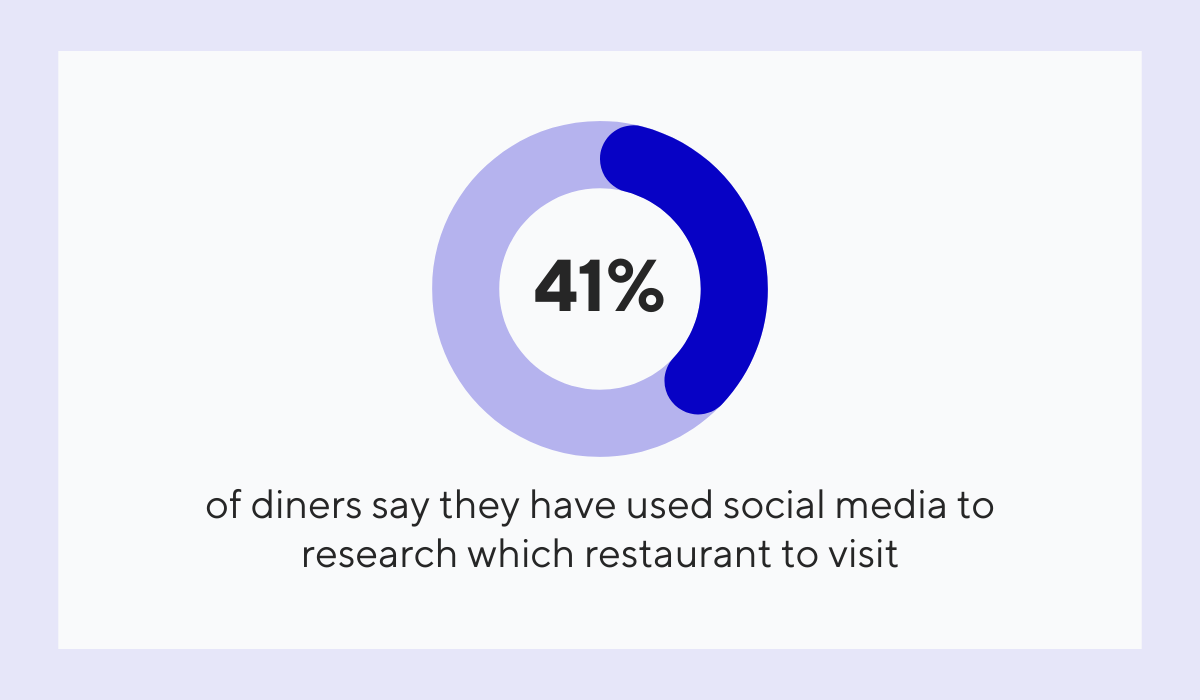
Illustration: [Tablein](https://www.tablein.com/) / Data: [TouchBistro](https://www.touchbistro.com/blog/diner-trends-report/)
Once you have captured attention, the next challenge is understanding what type of content helps increase brand awareness the most.
Research shows that short-form vertical video (SFVV) content performs exceptionally well across social platforms.
Over [half of Instagram users](https://www.facebook.com/business/instagram/instagram-reels) interact with a Reel at least once a week, making it one of the platform’s most engaging content formats.
Kyle Drenon, CEO of Supper Co., an advertising agency specializing in food, beverage, and hospitality, [agrees](https://www.linkedin.com/top-content/hospitality-tourism/hospitality-branding-strategies/pull-marketing-strategies-for-restaurant-owners/), emphasizing how short, authentic videos help restaurants connect with audiences more effectively.
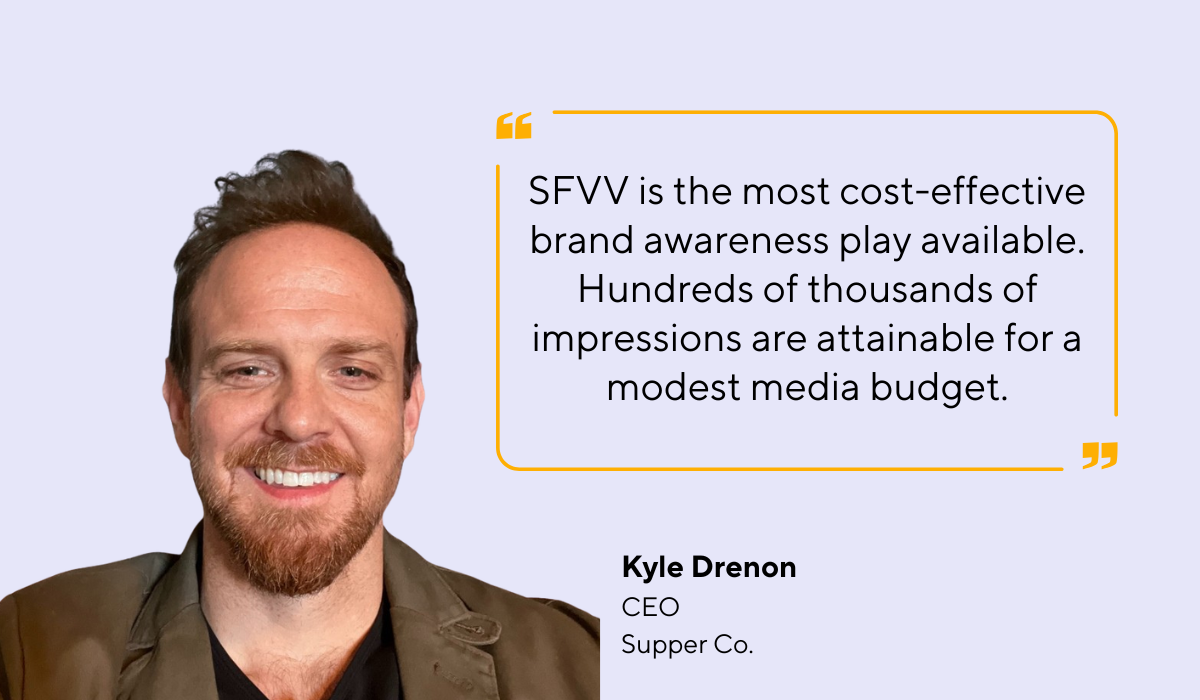
Illustration: [Tablein](https://www.tablein.com/) / Quote: [LinkedIn](https://www.linkedin.com/top-content/hospitality-tourism/hospitality-branding-strategies/pull-marketing-strategies-for-restaurant-owners/)
A well-known example of this approach is Chipotle, which has [built strong brand awareness](https://iide.co/case-studies/marketing-strategy-chipotle/) by consistently sharing short, vertical videos across Instagram and TikTok.
Rather than relying on polished ads, Chipotle focuses on quick clips that show food being prepared, ingredients being handled, and employees interacting naturally in the kitchen.
This style of content feels authentic, making it easy for viewers to recognize the brand and remember it when deciding where to eat.
In short, social media allows diners to discover your restaurant before they ever visit, turning online visibility into customers at your tables.
## **Drives More Table Reservations**
Getting people excited about your food is only half the battle.
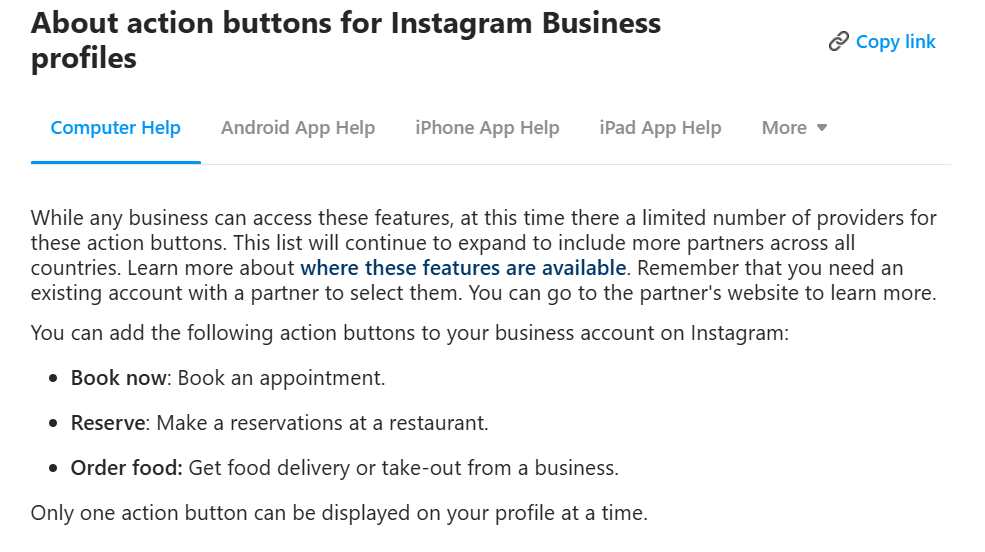
You also need to make booking a table as easy as possible, and social media platforms have built-in features specifically for this.
Instagram and Facebook both offer "Reserve" buttons that integrate directly with booking systems.
Source: [Instagram](https://help.instagram.com/122793804938499)
This reduces the time difference and effort between "I want to eat there" and "I have a reservation."
Instead of forcing customers to leave the app and search for your phone number, they can book in seconds right there and then.
The key is reducing steps in the booking process.
When someone sees your post about tonight's special and can instantly reserve a table without leaving the app, they're far more likely to follow through.
This is where embedding booking widgets becomes powerful.
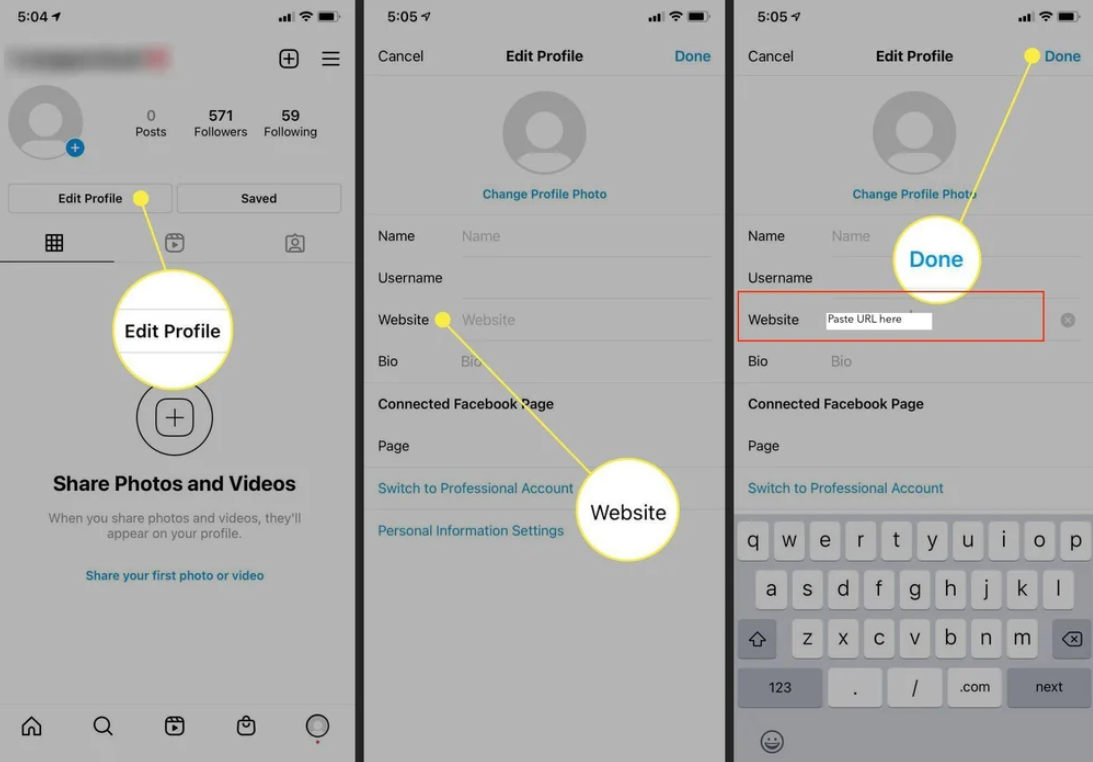
Table booking software solutions like[Tablein](https://www.tablein.com/table-booking-system-features) integrate directly with social platforms, so your reservation availability updates in real time.
With just a few clicks, guests can see which time slots are open and book instantly through the[widget you've added](https://help.tablein.com/how-to-add-a-tablein-link-to-instagram) to your Instagram bio or Facebook page.
Source: [Tablein](https://help.tablein.com/how-to-add-a-tablein-link-to-instagram)
Stories and posts promoting limited-time offers work especially well when paired with booking links.
An Instagram or Facebook story saying, for instance, "Only 3 tables left for Valentine's Day dinner!" with a direct booking button creates urgency.
Then there’s also the fact that people prefer the convenience of reserving tables from their phones rather than calling during business hours.
The mobile-first nature of social media plays a huge role here.
Most users scroll through Instagram or TikTok on their phones during commutes or lunch breaks.
So, if the booking system integrated with your social media platforms works smoothly on mobile, you capture these micro-moments when people are actively planning their next meal.
## **Builds Stronger Customer Relationships**
Social media isn't a one-way broadcast channel.
It's an opportunity for conversation, and this two-way communication is where you build lasting relationships with your customers.
When customers comment on your posts or send direct messages, responding shows you care about their experience.
This human touch transforms casual followers into loyal regulars who feel personally connected to your restaurant.
According to [Toast's research on diner trends](https://pos.toasttab.com/blog/on-the-line/restaurant-social-media), 43% of respondents think it's very important for restaurants to respond to comments or messages on social media.
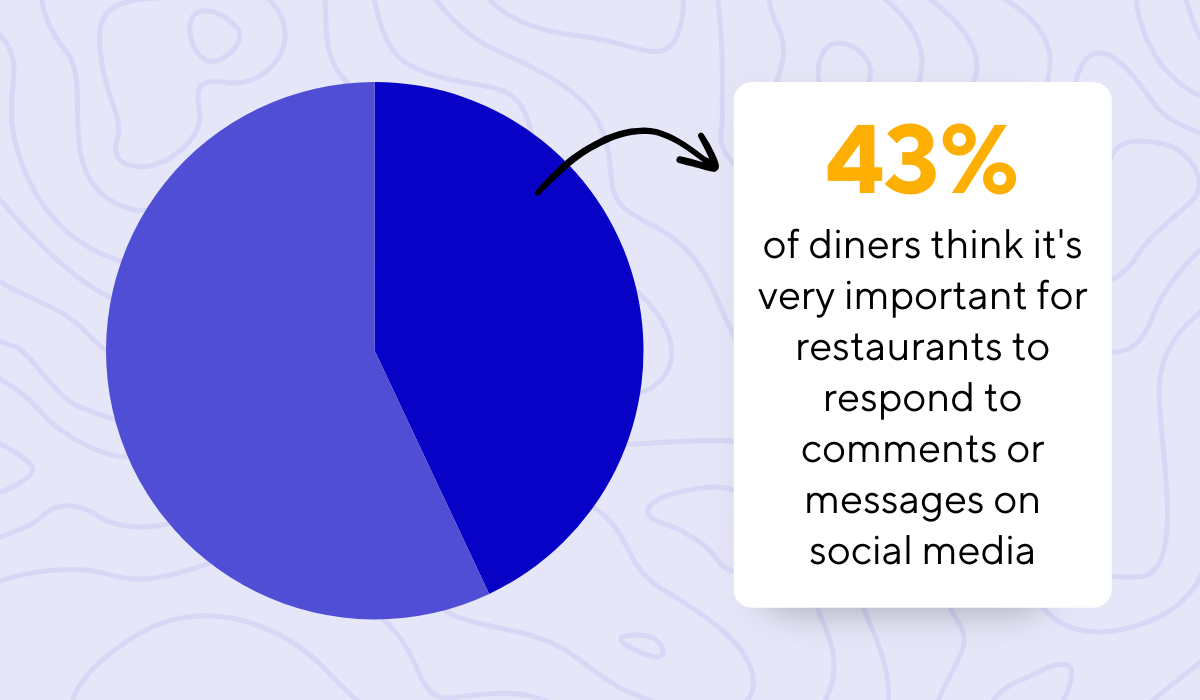Illustration: [Tablein](https://www.tablein.com/) / Data: [Toast](https://pos.toasttab.com/blog/on-the-line/restaurant-social-media)
Another 48% consider social media responses to be somewhat important.
In other words, people notice when you take the time to reply.
A simple "*Thank you for dining with us*!" or "*We're thrilled you loved the tiramisu*" makes customers feel valued. It's the digital equivalent of your server checking in during a meal.
Quick responses to questions also prevent lost bookings.
For example, if someone asks about dietary options or parking availability, being responsive can make all the difference between gaining and losing a customer.
According to the [2025 Sprout Social Index](https://sproutsocial.com/insights/index/), most consumers want brands to respond within 24 hours or sooner.
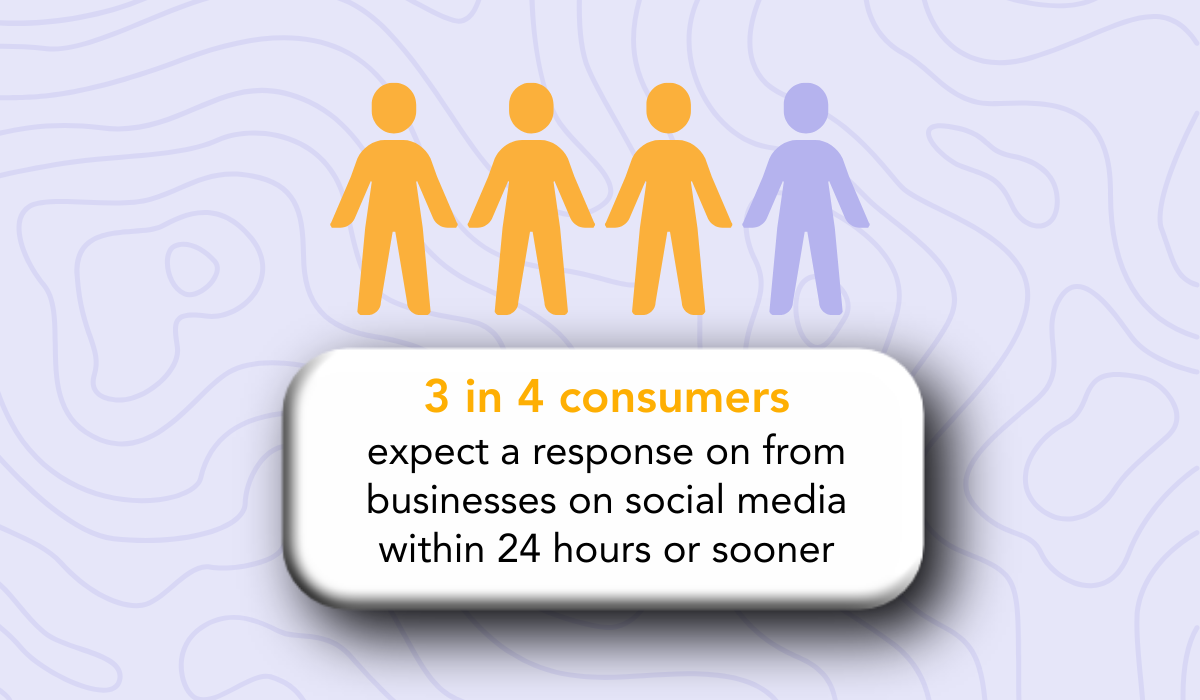
Illustration: [Tablein](https://www.tablein.com/) / Data: [Sprout Social](https://sproutsocial.com/insights/index/)
On top of that, 73% say they would simply go to a competitor if a business didn’t respond to them on social media.
Beyond speed, the way you handle interactions—especially in public—plays a key role in building trust with your audience.
Publicly addressing concerns builds trust with your entire audience.
When someone posts a complaint, and you respond professionally with a solution, everyone watching sees that you handle problems with care.
This strengthens your reputation.
A [great example](https://www.melissahughes.rocks/post/negative-restaurant-review-case-study) comes from Joe’s Italian Kitchen in Austin, Texas.
When a customer left a one-star review about slow service, the owner responded politely, acknowledged the issue, explained what happened, and invited the guest back for a better experience.
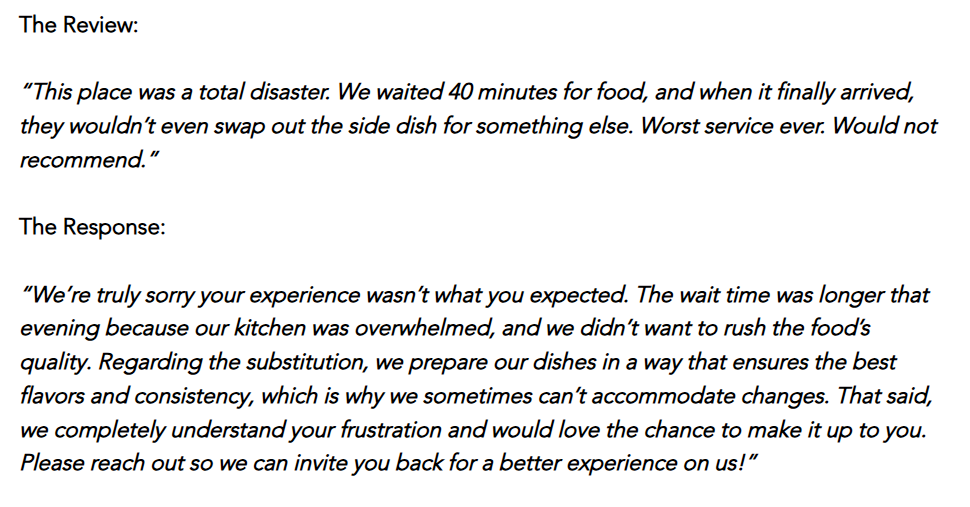
Source: [Melissa Hughes](https://www.melissahughes.rocks/post/negative-restaurant-review-case-study)
This professional and friendly approach showed that the restaurant cares about its customers and builds trust with everyone reading the comment.
By handling comments this way, each interaction becomes an opportunity to strengthen relationships.
Every reply, whether a quick thank-you or a carefully resolved complaint, reinforces your brand’s reliability and human touch.
## **Supports Promotion of Special Offers**
Last-minute cancellations happen, slow Tuesday afternoons can really drag on, and [special events](https://www.tablein.com/blog/tips-for-increasing-restaurant-event-reservations) could always use more attendees.
These are exactly the types of situations where social media shines, acting as a megaphone to fill tables instantly.
Unlike print ads that take weeks to launch, a social media post goes live in minutes and reaches your entire audience immediately.
This speed is crucial when you need to fill tables today, not next month.
Instagram Stories work perfectly for time-sensitive promotions.
For example, you can post a countdown sticker for your weekend brunch special or add a "Swipe up to book" link for tonight's empty tables.
The temporary nature of Stories creates urgency because people know the offer won't be there tomorrow.
Or, if you want the offer to have a more permanent spot on your profile, consider sharing it as a grid post.
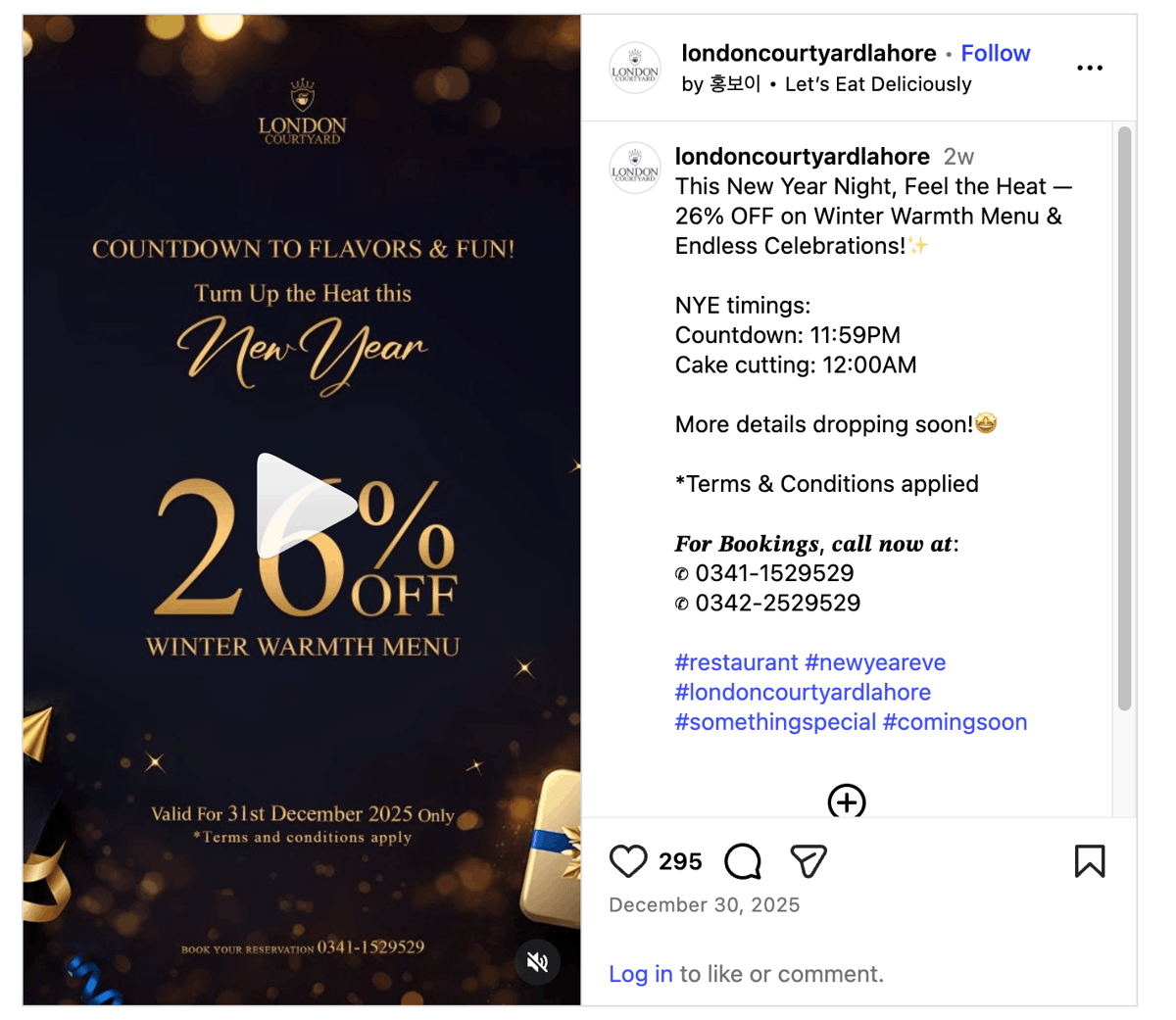
Source: [London Courtyard Lahore on Instagram](https://www.instagram.com/reel/DS5Zt1UDEAM/?igsh=OGZuYzZncHg0cWIy)
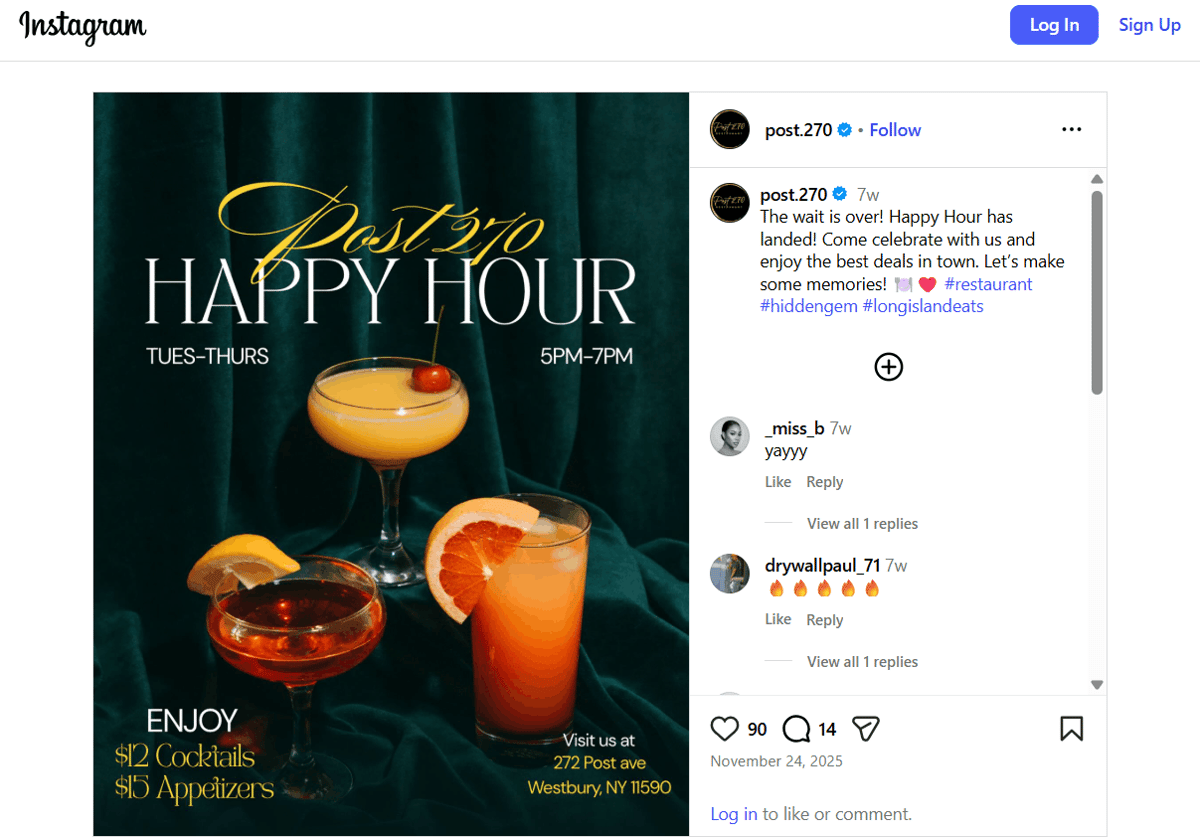
Another thing that can spread fast on social media platforms is happy hour promotions.
A simple post announcing "*Half-price appetizers 3 to 5 PM today*" can pack your dining room during typically slow hours.
Take a look at how [Post 270 Restaurant](https://www.instagram.com/p/DRconQCET6o/) in Westbury, NY, does it on Instagram:
Source: [Post 270 on Instagram](https://www.instagram.com/p/DRconQCET6o/)
You can also tag your location and use local hashtags to reach nearby workers looking for after-work plans.
The beauty of it all lies in the fact that you can test different offers quickly on social media.
Try posting "20% off takeout orders" one week and "Free dessert with entrees" the next.
Track which promotion drives more engagement and sales, then repeat what resonates.
And remember: exclusive social media deals make followers feel special, so you can announce promotions only to your Instagram or Facebook followers before sharing them anywhere else.
This rewards people for following you and creates a VIP club that encourages more engagement.
## **Provides Valuable Customer Insights**
Most restaurant owners make decisions based on gut feeling.
But social media analytics replace guesswork with hard data, showing you exactly what works.
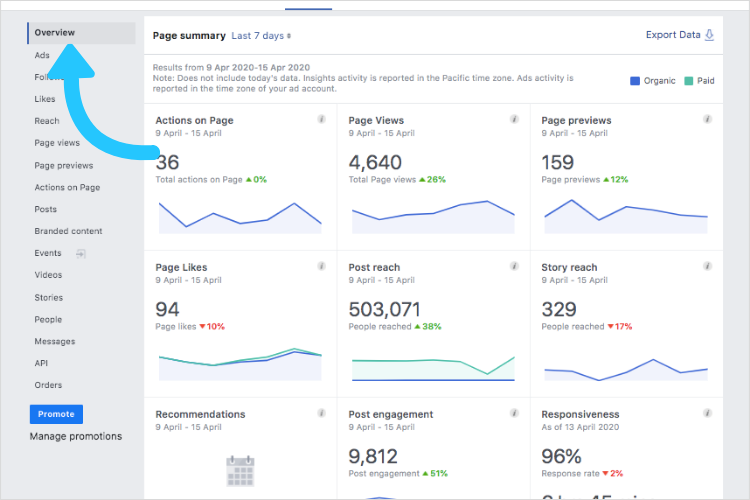
Built-in analytics tools on platforms like Instagram and Facebook show which posts perform best.
You can see how many people viewed, liked, saved, and shared each piece of content, and this reveals what your audience truly cares about.
Source: [Facebook Analytics](https://later.com/blog/facebook-analytics/)
These engagement metrics can also tell you which dishes generate the most interest.
For example, if your lobster ravioli post gets twice the likes as your salad post, it shows what your audience is most excited about and helps guide future menu promotions.
Reach and impressions, on the other hand, show how many people see your content.
Growing reach means your brand awareness is expanding.
Conversely, declining reach signals you need to adjust your posting strategy or try new content formats.
Or you might want to consider focusing on a different social media channel entirely.
Jill Grozalsky Roberson, Senior VP of Marketing at Velir, a data-driven experience agency, [explains](https://contentmarketinginstitute.com/social-media-content/is-social-media-even-worth-it-anymore):
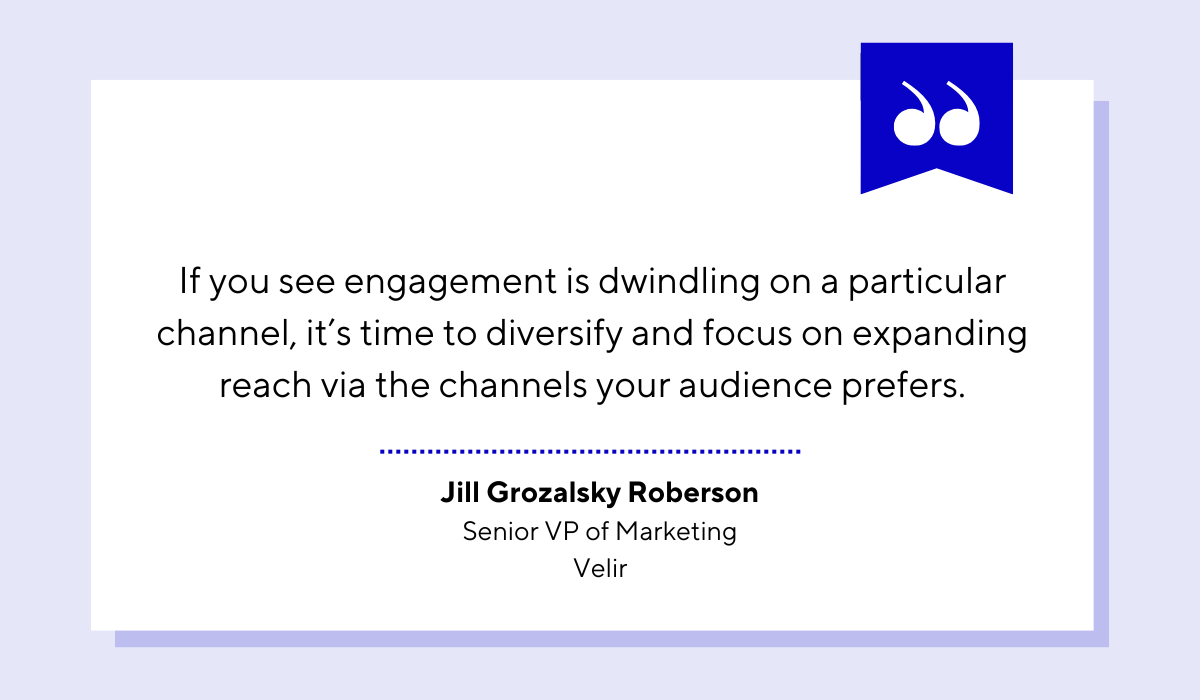
Illustration: [Tablein](https://www.tablein.com/) / Quote: [Content Marketing Institute](https://contentmarketinginstitute.com/social-media-content/is-social-media-even-worth-it-anymore)
Link clicks matter most for driving action.
So, track how many people click through to your menu, reservation page, or website from your social posts.
According to [Fishbowl's social media guide](https://www.fishbowl.com/guides/social-media-for-restaurants), low click rates despite high engagement might mean your call to action needs work.
Alongside this, keep track of engagement times to guide your posting schedule.
Analytics show when your followers are most active online. For instance, posting at 8 PM might reach more people than posting at 2 PM if your audience tends to scroll more during evening hours.
The bottom line?
Using data is bound to transform your social media activity from random posts into strategic marketing.
You make decisions based on evidence rather than assumptions, steadily improving results over time.
## **Conclusion**
Social media marketing isn't optional anymore for restaurants.
It's how people discover new places to eat, make reservations, and decide where to spend their money.
The numbers prove it works, with the majority of diners checking social channels before choosing a restaurant.
And if all of this feels way too overwhelming, start small.
You can pick one platform where your customers spend time, post three times a week with quality photos of your food, and respond to every comment and message.
Track what works using the built-in analytics and do more of it.
Your restaurant's next regular customer is scrolling right now, waiting to discover you. Make sure they can find you.
## Get a 30-day Exclusive Trial
As a Tablein blog reader, you’re eligible for an exclusive 30-day free trial to experience our simple reservation solution for your restaurant.
Enter your business email, and we’ll send you all the steps needed to create your account.
#### Share this
[Share on X](https://x.com/intent/post?url=https://www.tablein.com/blog/restaurant-social-media-marketing-benefits&text=5+Benefits+of+Social+Media+Marketing+for+Restaurants) [Share on Facebook](https://www.facebook.com/sharer/sharer.php?u=https://www.tablein.com/blog/restaurant-social-media-marketing-benefits&t=5+Benefits+of+Social+Media+Marketing+for+Restaurants) [Share on LinkedIn](https://www.linkedin.com/shareArticle?mini=true&url=https://www.tablein.com/blog/restaurant-social-media-marketing-benefits&t=5+Benefits+of+Social+Media+Marketing+for+Restaurants)
[← 5 Social Media Marketing Trends Restaurants Can't Ignore](https://www.tablein.com/blog/restaurant-social-media-marketing-trends)
[Restaurant Social Media Marketing: 12 Engaging Instagram Post Ideas →](https://www.tablein.com/blog/restaurant-social-media-marketing-instagram-ideas)
### You may also like
[Best Practices for Restaurant Social Media Marketing](https://www.tablein.com/blog/restaurant-social-media-marketing-best-practices)
#### Best Practices for Restaurant Social Media Marketing
Mar 5, 2026 12:45:01 PM
[Why Restaurants Should Use TikTok for Social Media Marketing](https://www.tablein.com/blog/tiktok-for-restaurant-social-media-marketing)
#### Why Restaurants Should Use TikTok for Social Media Marketing
Mar 19, 2026 12:45:00 PM
[The Ultimate Guide to SMS Marketing for Restaurants](https://www.tablein.com/blog/restaurant-sms-marketing)

#### The Ultimate Guide to SMS Marketing for Restaurants
Nov 1, 2024 12:15:00 PM
## Sign up now and explore how Tablein can help you. Start accepting reservations in minutes.
Get started absolutely free for 14 days. No credit card required. No risk.
[Try it free](https://www.tablein.com/signup) [Explore the features](https://www.tablein.com/table-booking-system-features)
Have a question? Ask in the live chat on the right!
#### Table booking system for small restaurants
Join restaurants who organise reservations and grow their businesses with Tablein.
[Open your account](https://www.tablein.com/signup/?hsLang=en)
[Join us on Slack](https://www.instagram.com/inspirations_by_tablein/)[Join us on Slack](https://www.linkedin.com/company/table-booking-system-tablein-com/)
FEATURES
- [Online reservations](https://www.tablein.com/product-tour/)
- [Email notifications](https://www.tablein.com/product-tour/)
- [Website integrations](https://www.tablein.com/product-tour/)
- [Reservation management](https://www.tablein.com/product-tour/)
- [Floor plan setup](https://www.tablein.com/product-tour/)
- [Marketing and reports](https://www.tablein.com/product-tour/)
- [Prepayments](https://www.tablein.com/product-tour/)
COMPANY
- [Pricing](https://www.tablein.com/pricing)
- [About us](https://www.tablein.com/about-tablein)
- Careers
- [Privacy policy](https://www.tablein.com/privacy)
- [Terms of service](https://www.tablein.com/terms-and-conditions)
- [Contact us](https://www.tablein.com/contact)
- [EU Investments](https://www.tablein.com/es-investicijos)
CONNECT
- [Read our blog](https://www.tablein.com/blog)
- [Instagram](https://www.instagram.com/inspirations_by_tablein/)
- [Linkedin](https://www.linkedin.com/company/table-booking-system-tablein-com/)
Copyright © 2023. Tablein - table booking system for small restaurants
- [Terms](https://www.tablein.com/terms-and-conditions)
- [Privacy](https://www.tablein.com/privacy/)
### Tablein 14 day free trial
Register and explore the system features free of charge
```json
{
"@context" : "https://schema.org",
"@type" : "BlogPosting",
"author" : {
"@type" : "Person",
"name" : "Tablein Team",
"url" : "https://www.tablein.com/blog/author/tablein"
},
"dateModified" : "2026-02-23T09:30:01.273Z",
"datePublished" : "2026-02-23T09:30:01.000Z",
"headline" : "5 Benefits of Social Media Marketing for Restaurants",
"image" : [ "https://www.tablein.com/hubfs/image7-Feb-05-2026-11-08-32-7870-AM.png" ],
"mainEntityOfPage" : {
"@id" : "https://www.tablein.com/blog/restaurant-social-media-marketing-benefits",
"@type" : "WebPage"
},
"publisher" : {
"@type" : "Organization",
"logo" : {
"@type" : "ImageObject",
"url" : "https://www.tablein.com/hubfs/Group%201000005868.png"
},
"name" : "Tablein."
}
}
```