

Yelp has been one of the go-to listing platforms for restaurants and local businesses in the U.S. and beyond for nearly two decades.
However, many modern alternatives now offer more advanced reservation management while still helping restaurants stand out.
This guide explores six reliable solutions designed for today’s operators, helping you strengthen your digital presence, streamline bookings, and attract guests until every seat is filled.
Tablein
Let’s start with the reservation management solution we know best: Tablein.
Unlike Yelp, which evolved from a consumer discovery site into a restaurant operations tool, Tablein was purpose-built for restaurants that want a clean, efficient, and easy-to-learn system.
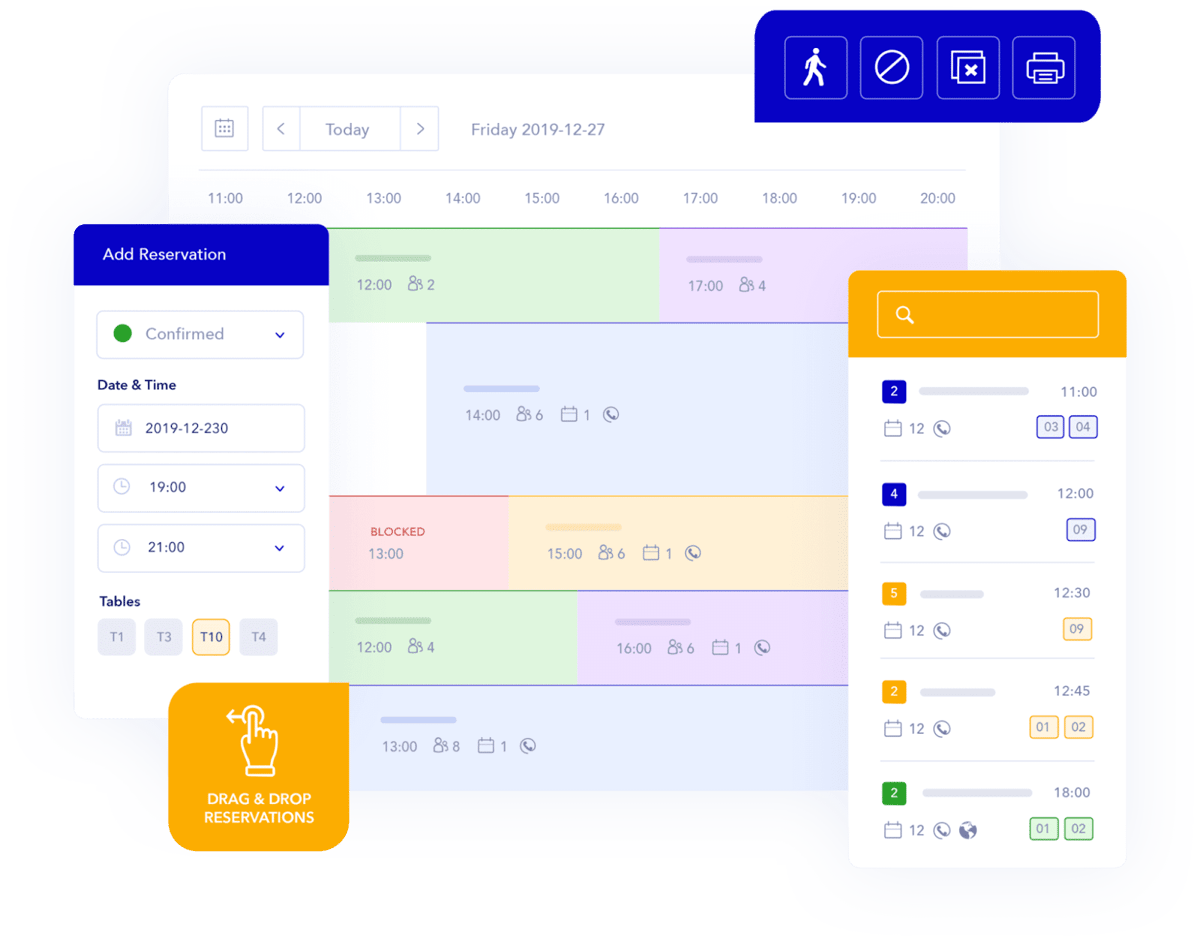
The interface is intentionally minimal, allowing staff to add, edit, and move bookings in seconds from any device.
Source: Tablein
Drag-and-drop controls make it effortless to rearrange reservations, adjust table assignments, or resolve potential overlaps without navigating multiple screens.
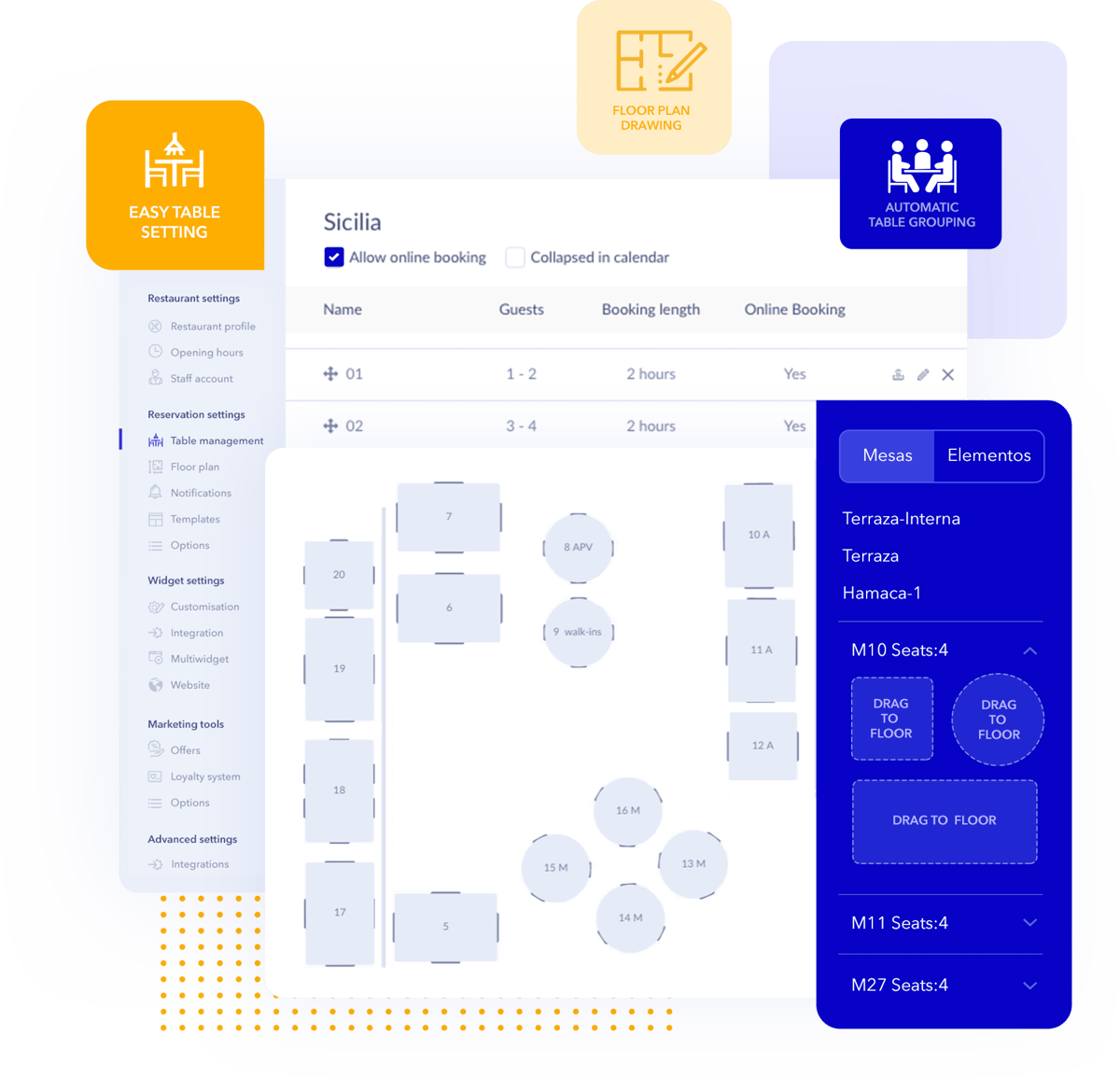
Tablein’s floor plan management follows the same streamlined approach.
You can build custom layouts for each venue, reflect table sizes and shapes, and make rapid adjustments throughout the day.
Source: Tablein
Of course, Tablein’s ease of use is most evident to diners who can seamlessly make a booking directly from a website or via Google Maps, Meta platforms, Tripadvisor, and the Michelin Guide.
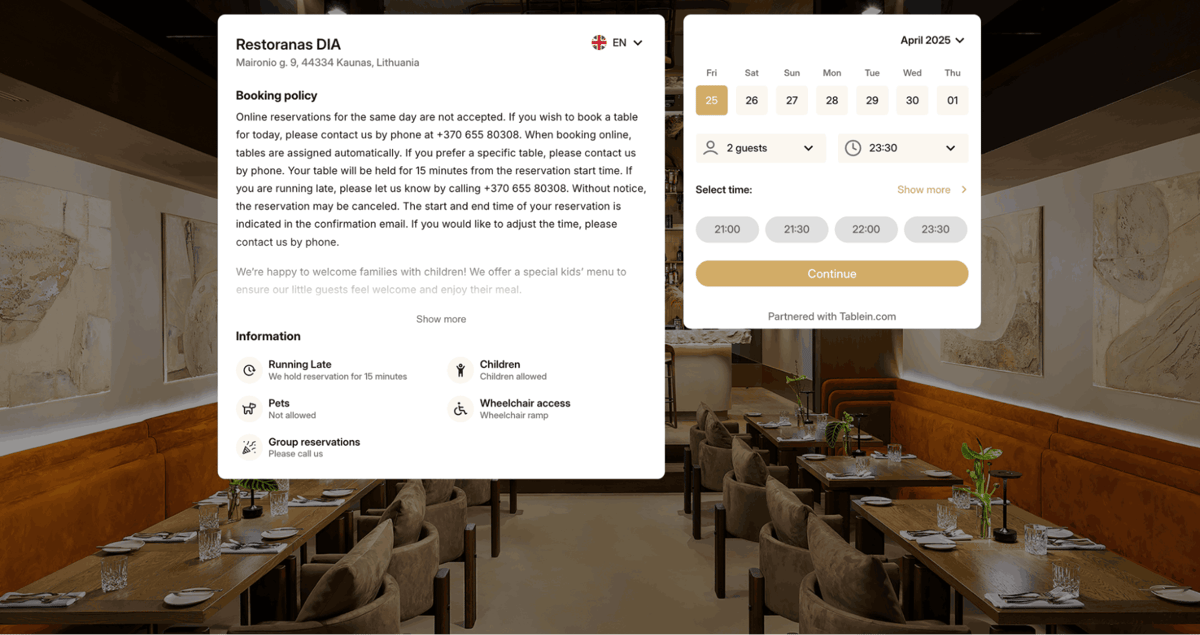
Extensive widget customization options, which include branding, are another area where Tablein provides more control than many reservation tools, Yelp included.
You can adjust accent colors, choose from predefined themes, or upload a photo of their venue to ensure it blends naturally into their website’s design.
Source: Tablein
But simplicity doesn’t mean a lack of features.
The platform includes a free website builder, key marketing and payment integrations, as well as a 24/7 online booking system available in 28 languages.
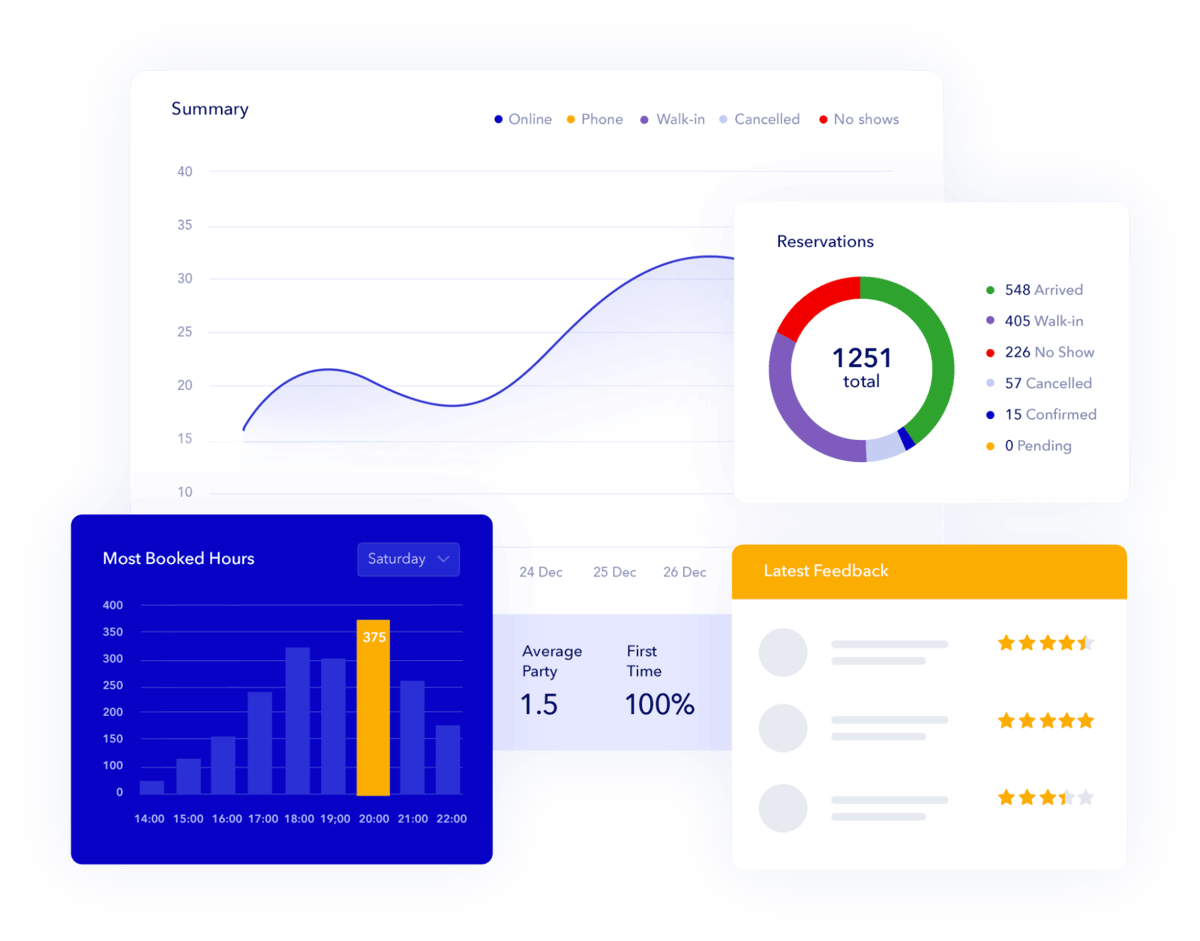
The platform also boasts guest management features, with a comprehensive CRM currently in development and analytics capabilities that cover all essential data needs, and more.
As pictured below, restaurants can review daily performance, track booking trends, and generate pre-set or custom reports.
Source: Tablein
For most, this level of insight is exactly what they need without the complexity or cost of enterprise analytics tools.
In line with that, users on Capterra and GetApp consistently highlight Tablein’s ease of use and reliability, as well as our attentive support team.
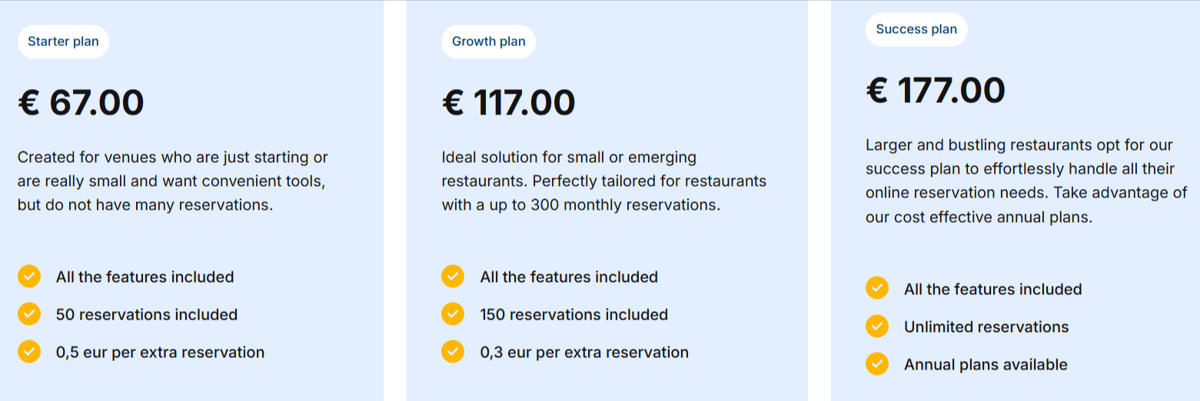
In terms of pricing, plans start at €67 per month with all features included across different pricing tiers, and the 14-day free trial makes it easy to evaluate the system before committing.
Source: Tablein
All in all, for restaurants that want a straightforward, dependable alternative to Yelp, Tablein is a strong match that removes friction and offers more flexibility.
Eat App
Eat App is a well-rounded reservation and table management platform designed for restaurants that want more control over guest data without having to deal with too much complexity.
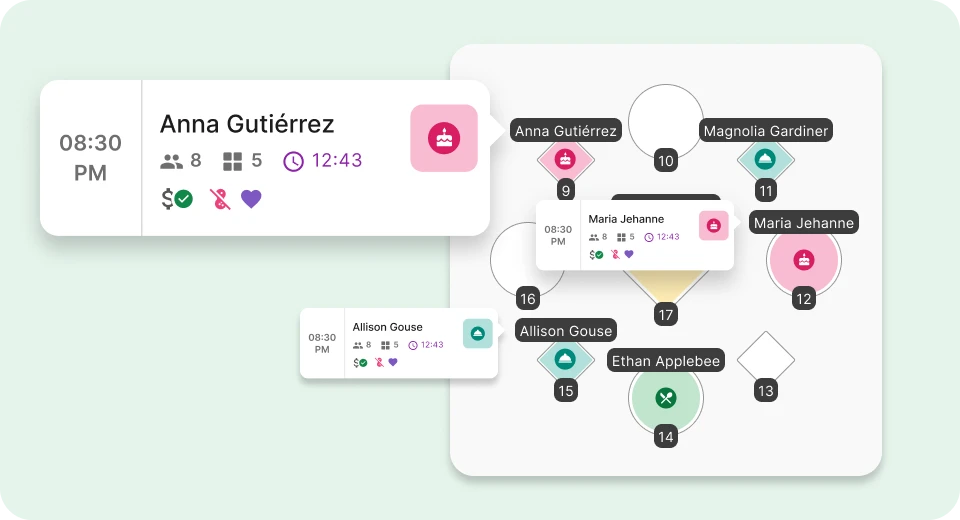
At its core, the system offers the essentials you’d expect, namely: an intuitive reservation interface, easy table scheduling, and a clean floor plan view.
Source: Eat App
One notable point of difference between this platform and solutions like Yelp lies in its approach to discovery.
Instead of offering a native discovery marketplace, Eat App positions itself as a tool for restaurants that already bring in guests through their own channels and want deeper insights.
Eat App’s key differentiator is its guest database powered by advanced CRM features, which enable you to focus on improving your diners’ experience.
Source: Eat App on YouTube
The platform offers extensive guest profiling while leaning less into events and more toward analytics.
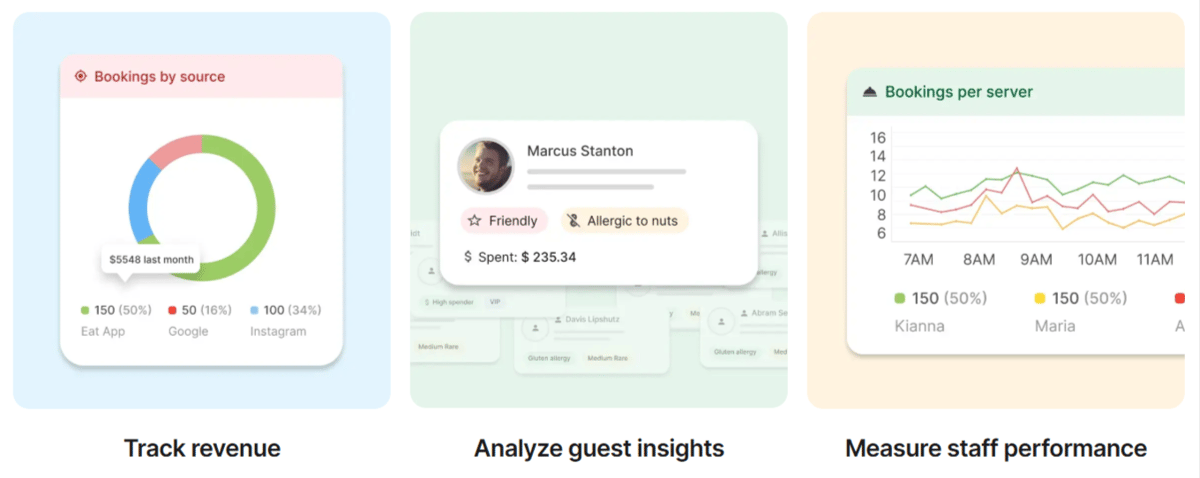
Eat App users can rely on AI-driven insights, dynamic segmentation, automated surveys, and customizable reporting tools for tracking behaviors, preferences, and trends.
Besides identifying peak booking times and diner preferences, you can also zoom in on staff and event performance.
Source: Eat App
Nevertheless, Eat App isn’t equipped with built-in marketing tools, but relies on integrations instead.
The platform supports various common POS systems and payment processors, contributing to consistently high reviews highlighting the system’s usability and efficiency.
Still, it’s also worth mentioning that some users reported laggy updates in cases where multiple devices are used.
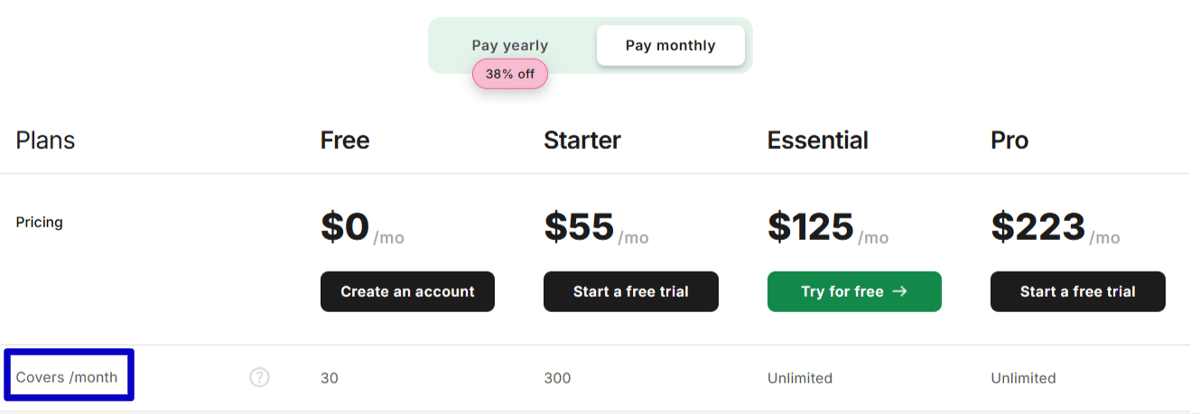
Pricing is structured across four plans—including a free tier—with a monthly reservation volume indicated for each.
While the starter plan is very affordable at $55, keep in mind that most advanced features are locked behind add-ons or the $223 Pro plan.
Source: Eat App
That said, with both free trials and personalized demos available, restaurants can explore whether Eat App’s guest and data-centric approach fits their operational style without any commitments.
OpenTable
OpenTable is one of the biggest names in the industry, designed for busy, high-volume restaurants that want operational structure and more visibility.
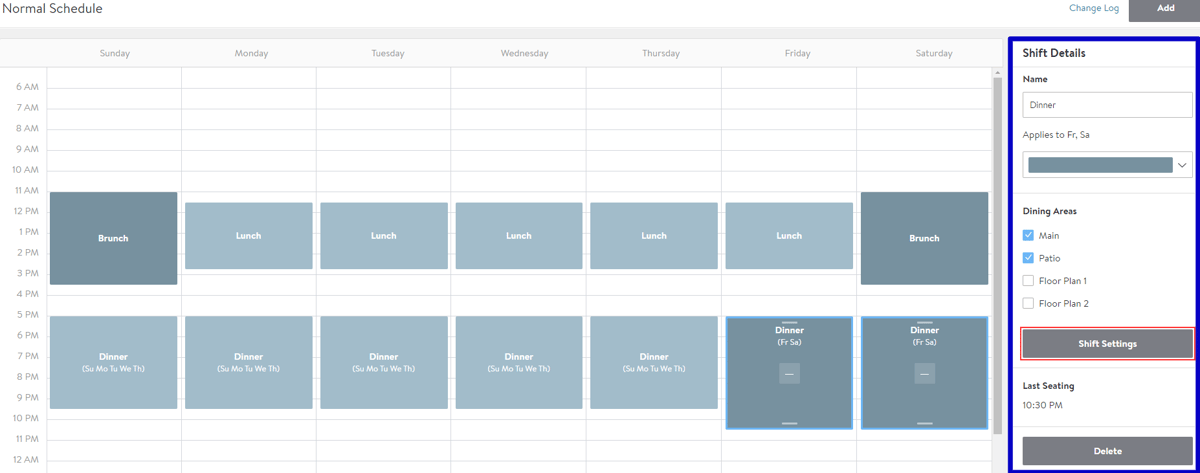
The platform has long positioned itself as both a reservation system and a global dining guide, and a big part of its appeal is the combination of table management and shift-planning tools.
Your staff can see the entire dining room at a glance, adjust layouts, review pre-shift reports, and maximize availability by precisely defining the number of turns by party size or table.
Source: OpenTable
You can do this ahead of time or during the shift, but the main idea is to capture new reservations while not overwhelming the staff.
OpenTable offers one of the largest discovery networks in the industry, with restaurants appearing in curated lists, trend roundups, “nearby” searches, and as push notifications on last-minute tables and new offers.
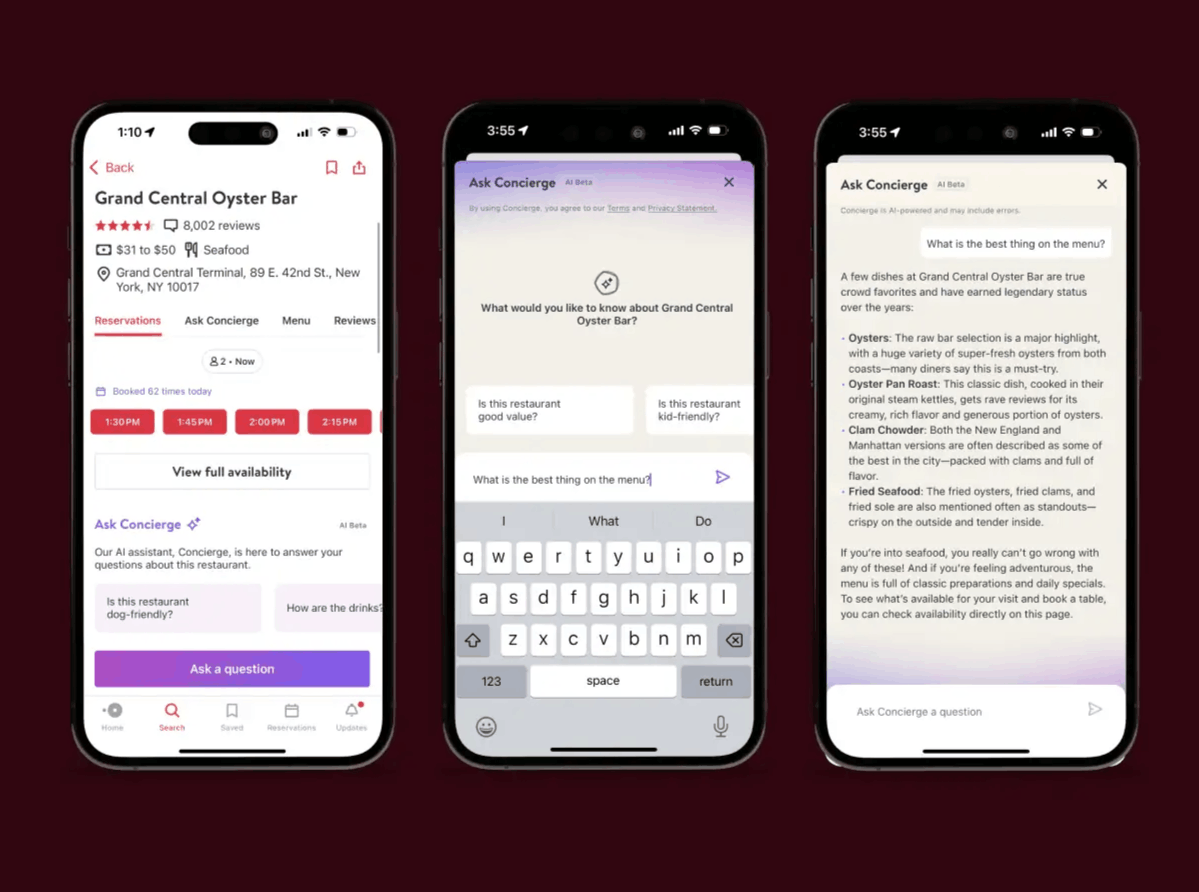
While restaurants have always been just a few clicks away, OpenTable has recently introduced its AI Concierge, an AI-powered dining assistant that helps guests find restaurants based on preferences, mood, and past behavior.
Source: OpenTable
In other words, increased restaurant exposure is made even more impactful thanks to personalized, real-time recommendations that make both guests and restaurateurs happy.
Marketing tools complement these offerings further.
You can segment audiences, send targeted email campaigns, and track engagement.
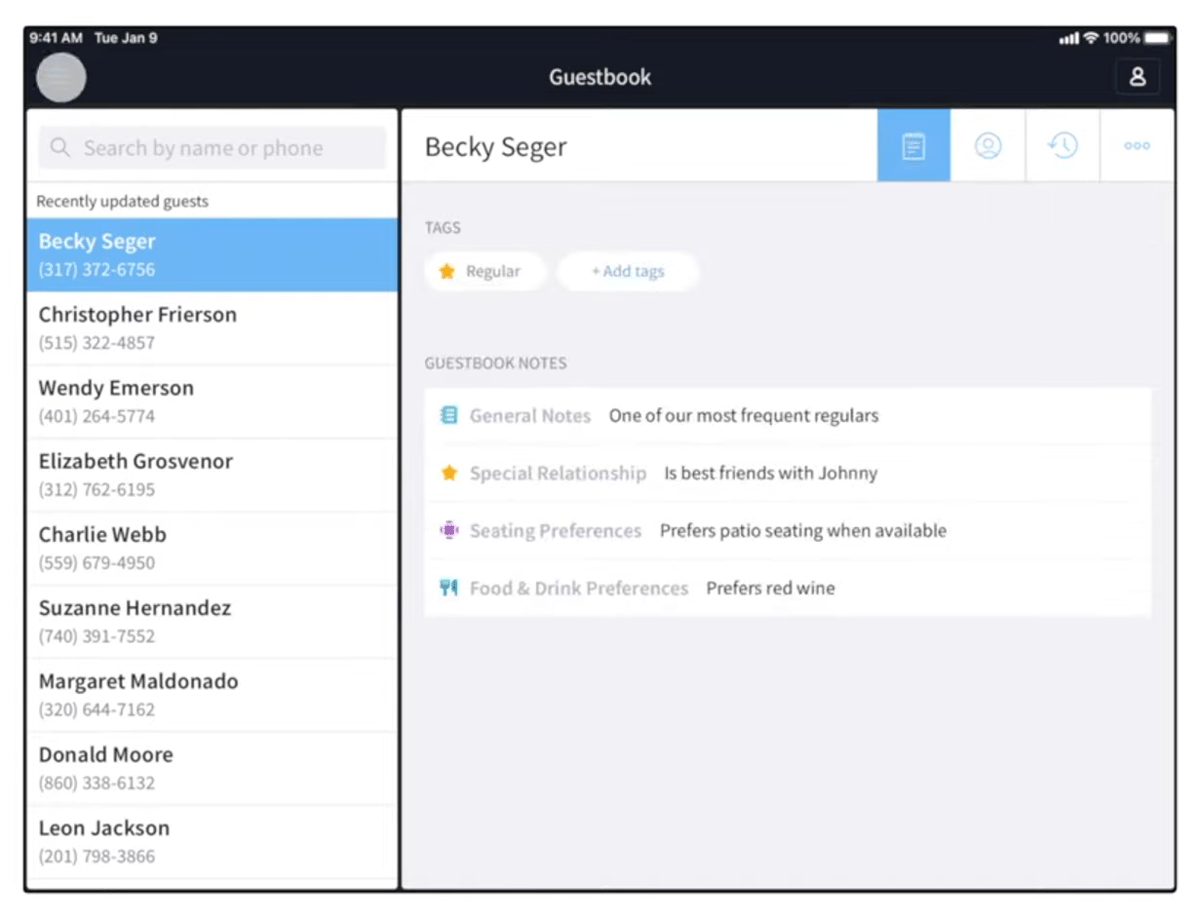
The system also builds fairly detailed guest profiles that power pre-shift reports, helping teams personalize service, anticipate large parties, and pace the room strategically.
Source: OpenTable Training on YouTube
Still, these entries can’t replace a full-scale CRM or match an event-focused tool like Tock.
Many users praise OpenTable’s ease of use, which isn’t surprising given the extensive YouTube tutorials and guides, as well as the interface itself.
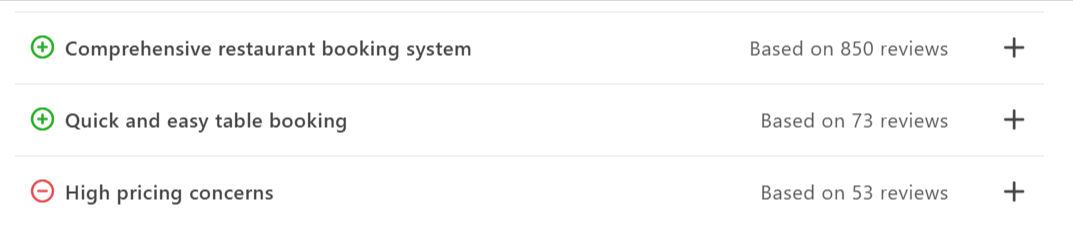
However, judging by several Capterra reviews, pricing remains a major point of concern.
Source: Capterra
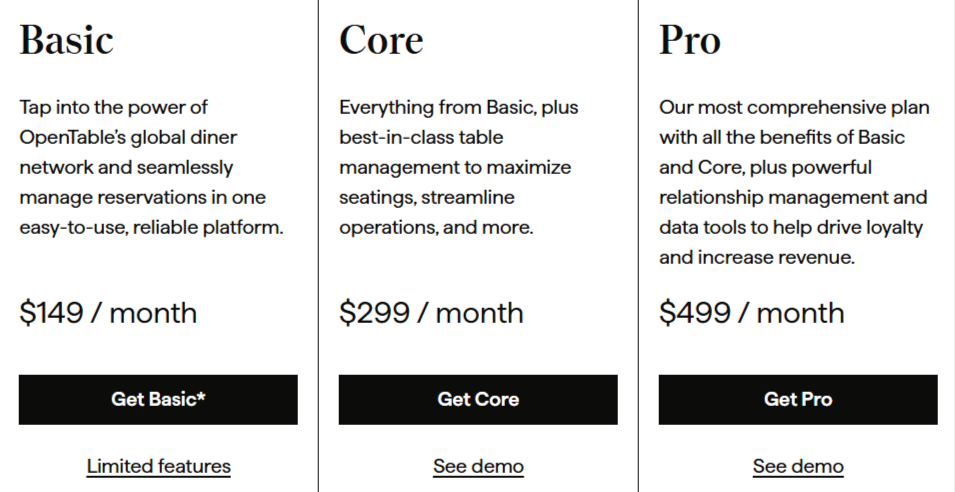
The base plan starts at $149 per month, but the per-cover commissions can add up quickly, making it a challenge for smaller venues looking for a more affordable and predictable investment.
Source: OpenTable
All in all, OpenTable remains a strong choice, especially for those prioritizing visibility, but its true value comes down to how heavily you plan to rely on its network.
TouchBistro
TouchBistro’s all-in-one restaurant POS and payments system also offers a fully integrated reservation system, appealing to restaurants that want tighter front-of-house control.
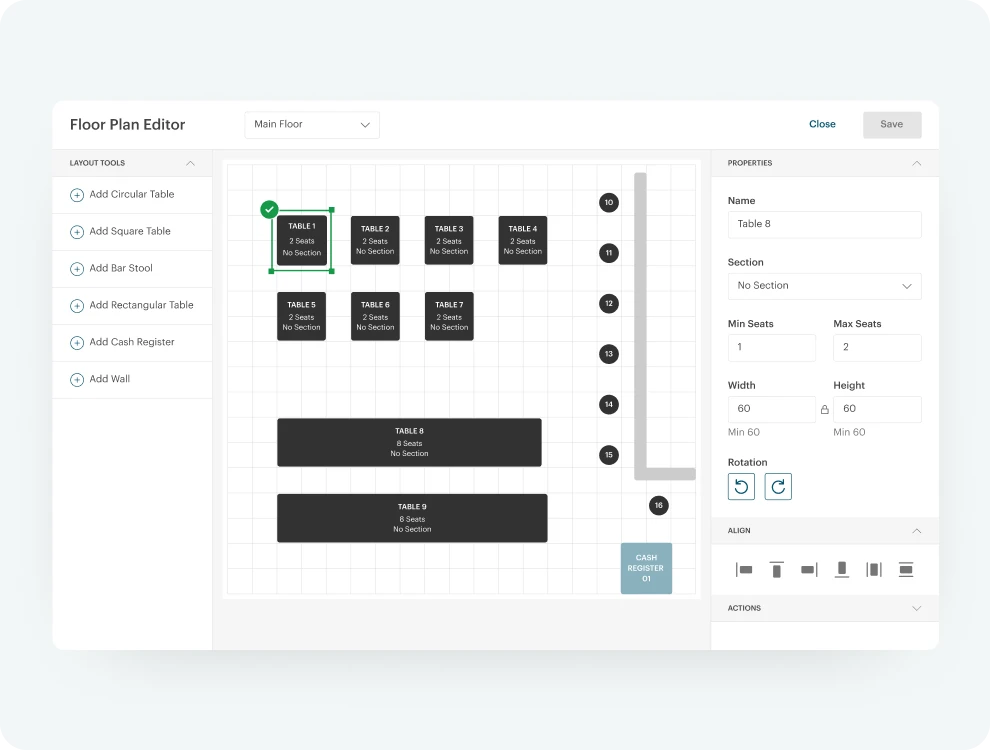
It starts with the essentials: a clear floor plan view, table status tracking, and a straightforward scheduling interface.
Source: TouchBistro
Staff can see what’s happening in real time, move reservations easily, and stay on top of waitlists without needing to switch between tools.
And because reservations connect directly to the POS, the system keeps service aligned and reduces manual checks.
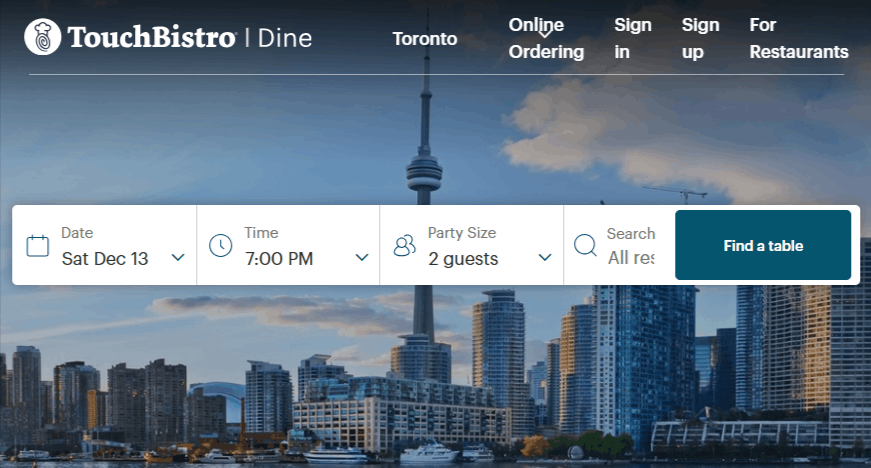
Discovery is handled through TouchBistro Dine, the platform’s consumer-facing network, where restaurants can customize their profiles with photos, descriptions, and key details.
Source: TouchBistro Dine
Although the audience is smaller than Yelp’s, TouchBistro provides operators with a branded space where they don’t have to compete with user reviews or unrelated listings.
In general, TouchBistro’s feature set is divided into three key modules:
- Front of House
- Back of House
- Guest Engagement
The structure itself makes it easy to scale, so you can start with reservations and add features as needed.
The Guest Engagement module is one of the standout features of the system, bringing together loyalty tools, automated marketing, gift cards, and online ordering.
Furthermore, restaurants can try out plenty of customization options for branding and even use TouchBistro’s custom-branded web app, focusing on loyalty.
The app lets guests leave valuable feedback about their dining experience, subscribe to emails, receive messages, view promotions, and more.
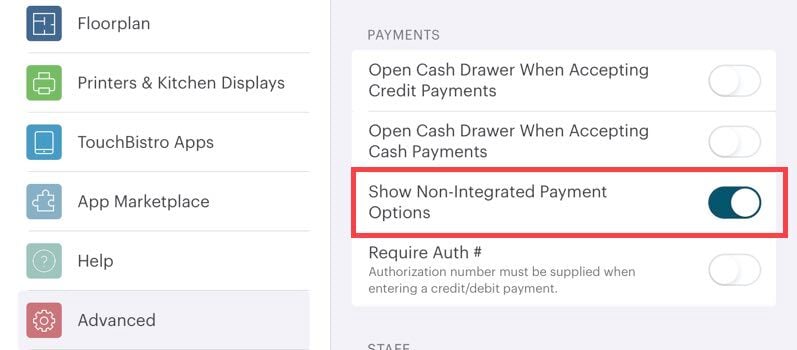
Moreover, there are plenty of payment integration options to ensure greater convenience for all guests.
Source: TouchBistro
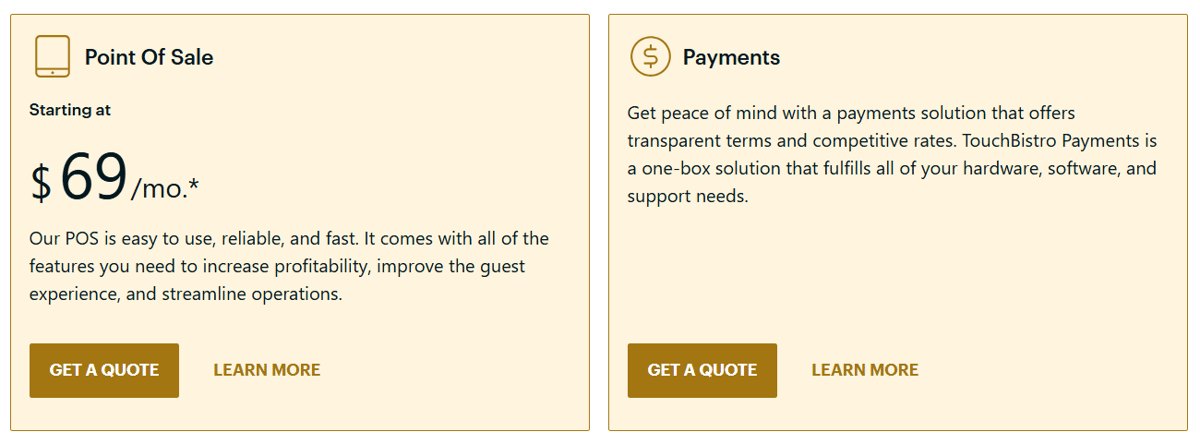
Pricing is subscription-based, with the POS Software Plans starting from $69 monthly.
However, since many features are sold as add-ons, you’ll need to get a quote and calculate the final cost depending on how many modules you activate.
Source: TouchBistro
In conclusion, for restaurants that want an all-in-one operational system with an integrated reservation tool, TouchBistro is a practical choice.
Resy
Resy is one of the standout names in reservation management, especially for restaurants that want operational control and a built-in diner network.
While Yelp also gives restaurants access to a huge consumer audience, Resy bases its approach on curated experiences, premium partnerships, and a more stylized brand identity.
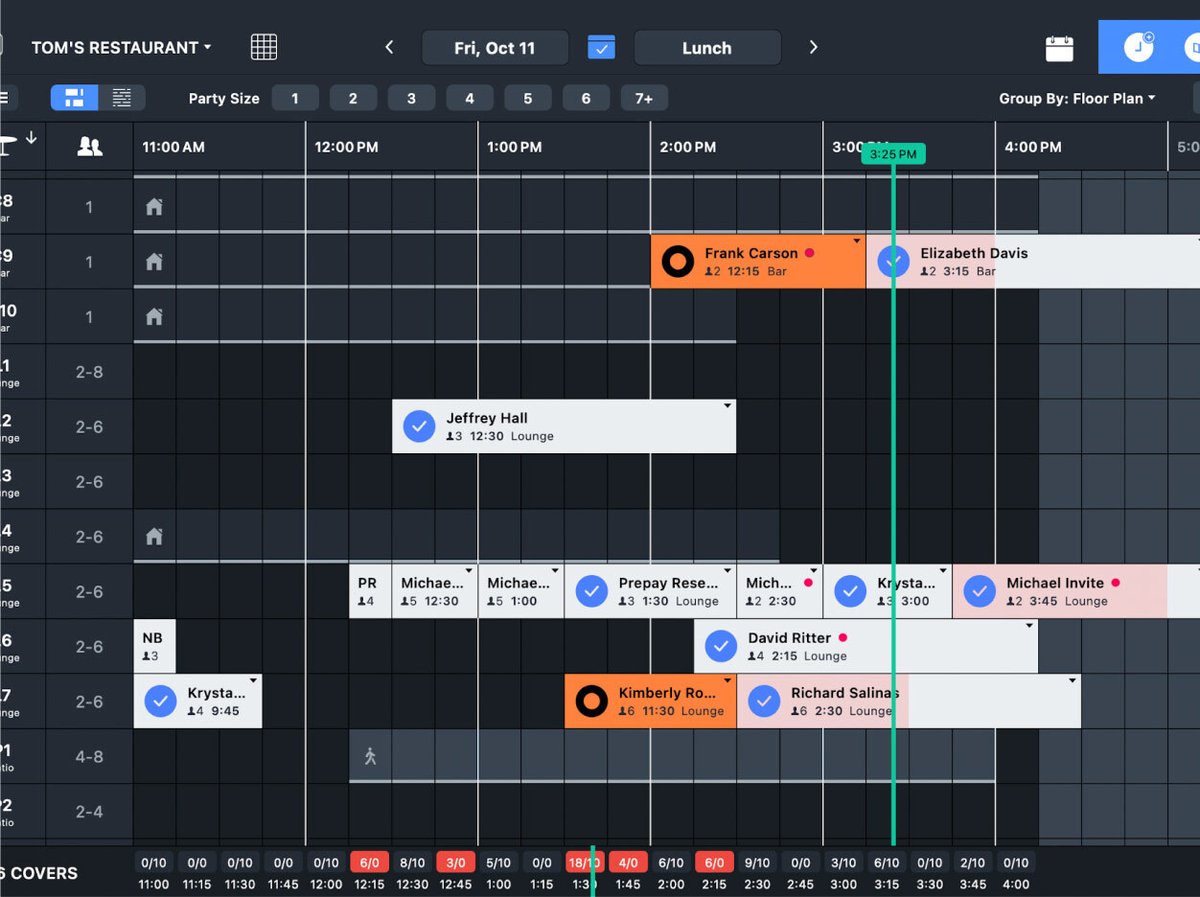
But for starters, Resy offers all the essential features restaurants expect from modern reservation software, from online bookings, waitlists, and automated messaging, to clean calendar and floor-plan views.
Source: Resy
The sleek interface supports dark mode and is intentionally minimal to ensure staff move quickly during high-volume shifts.
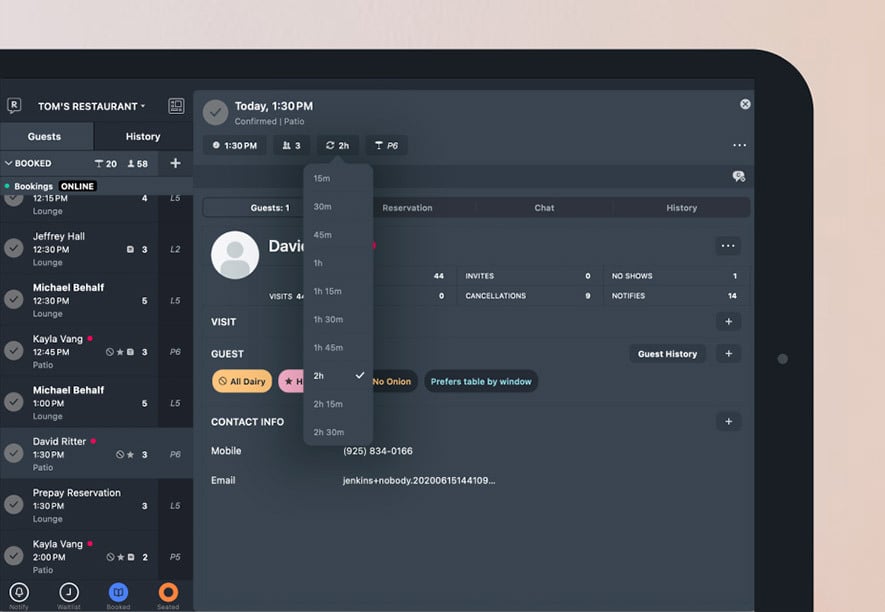
Resy’s guest management system is on par with others on the list, but with a few interesting tweaks.
Namely, you can allow guests to choose their preferred seating during booking, and customize your reservation inventory to cater to their unique preferences.
Source: Resy
In terms of promotion, Resy Marketing engine is powered by the platform’s exclusive partnership with American Express.
Through this collaboration, restaurants can plug directly into a high-spending, travel-savvy dining audience and be part of branded promotions.
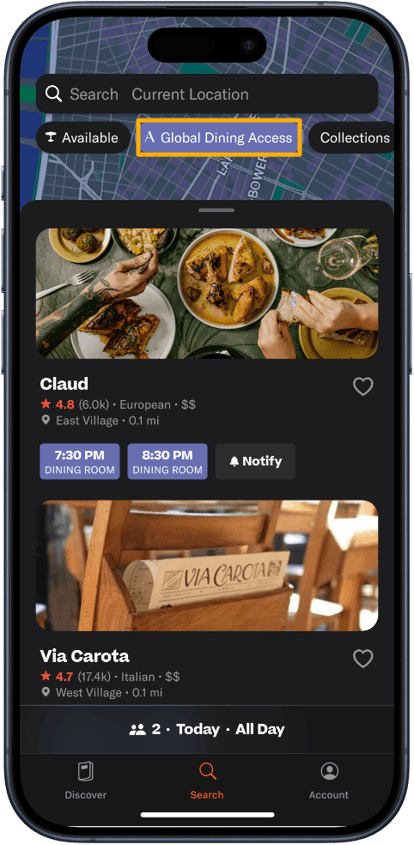
On the other hand, users can set up alerts for any U.S. Resy restaurant and, if they’re using the app, also receive real-time push notifications about table availability for restaurants that match specifications.
Source: Resy
Pretty appealing for restaurants that want premium visibility, but one operational detail should be noted.
While Yelp is available on all major platforms, Resy currently supports only iOS for diners, which is sure to impact booking for a notable segment of guests.
Resy also supports special campaigns, such as Member Week and Tastemaker events, which help restaurants generate buzz and fill seats during slower periods.
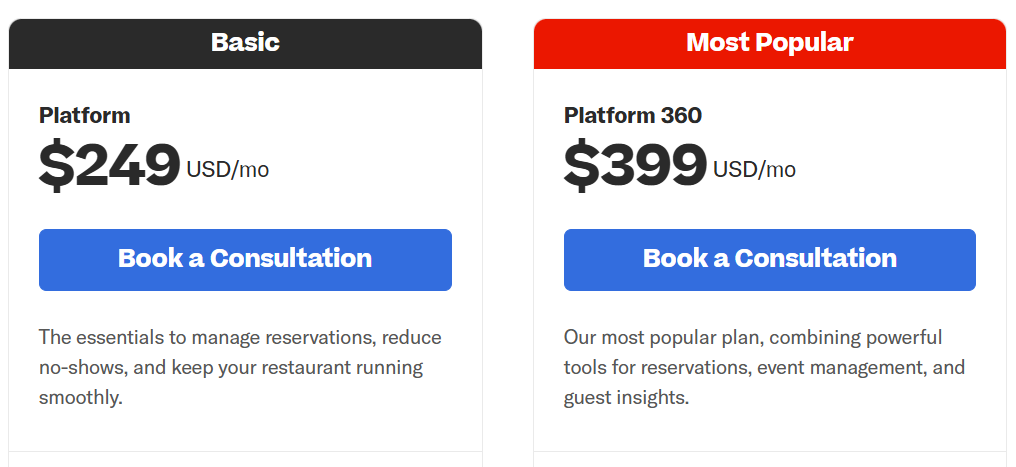
Pricing starts at $249 per month, and unlike Yelp’s custom-priced reservation APIs or traffic-based upsells, Resy does not charge cover fees.
Source: Resy
While there’s no free trial, restaurants can book a consultation to explore fit and functionality.
To sum up, if you want a reservation system with essential features, strong branding, and a curated diner base of American Express cardmembers, Resy is definitely a strong candidate.
Tock
One of the most recognizable reservation platforms in the industry, Tock is best known for blending traditional table management with event ticketing and prepaid dining experiences.
This makes it a compelling option for venues that rely heavily on curated events, seasonal menus, or tiered seating.
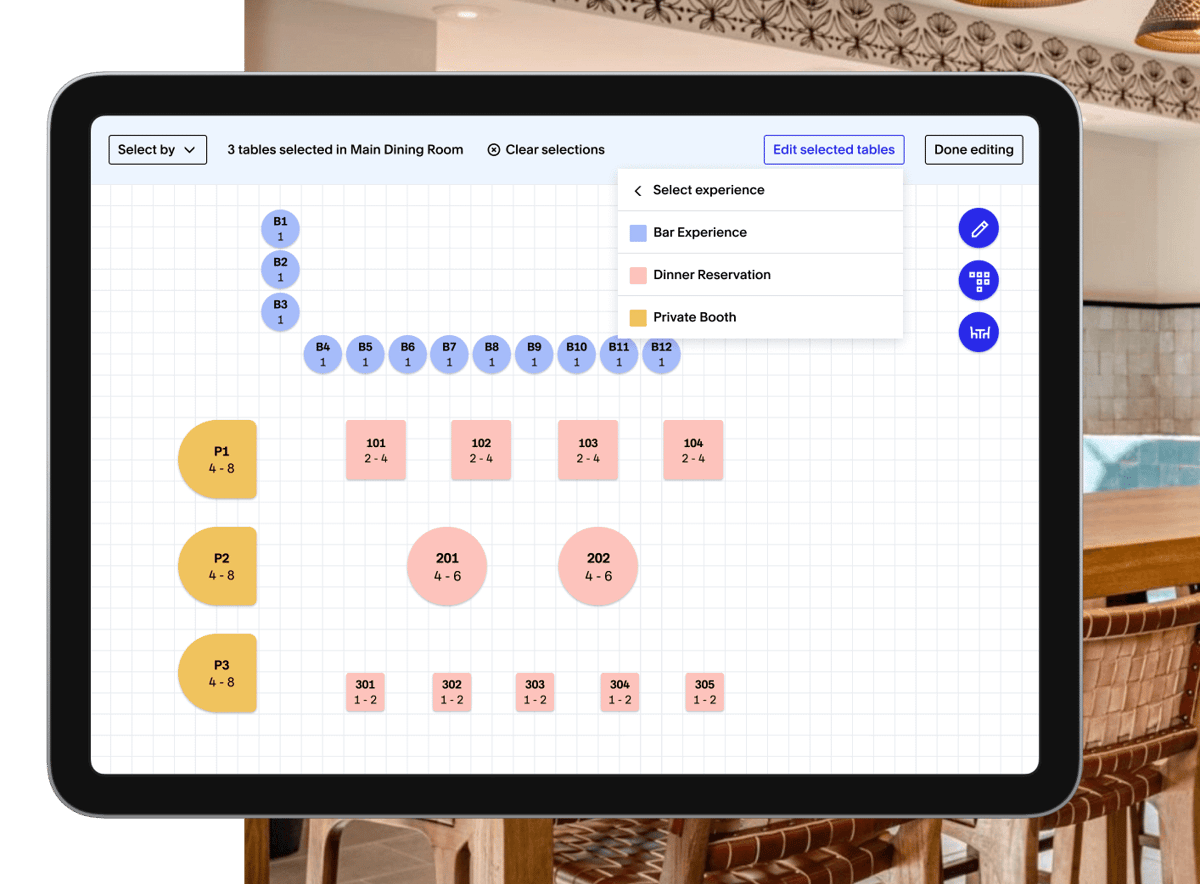
But this doesn’t mean that Tock’s core features, such as its flexible floor plan management, are any less impressive.
The system allows teams to switch between multiple layouts and sections, which is particularly helpful to large venues or restaurants that frequently reconfigure their space for private dining.
Source: Tock
While Tock offers greater customization depth compared to more lightweight tools such as Tablein, more options mean more complexity, especially for smaller teams that don’t need this level of control.
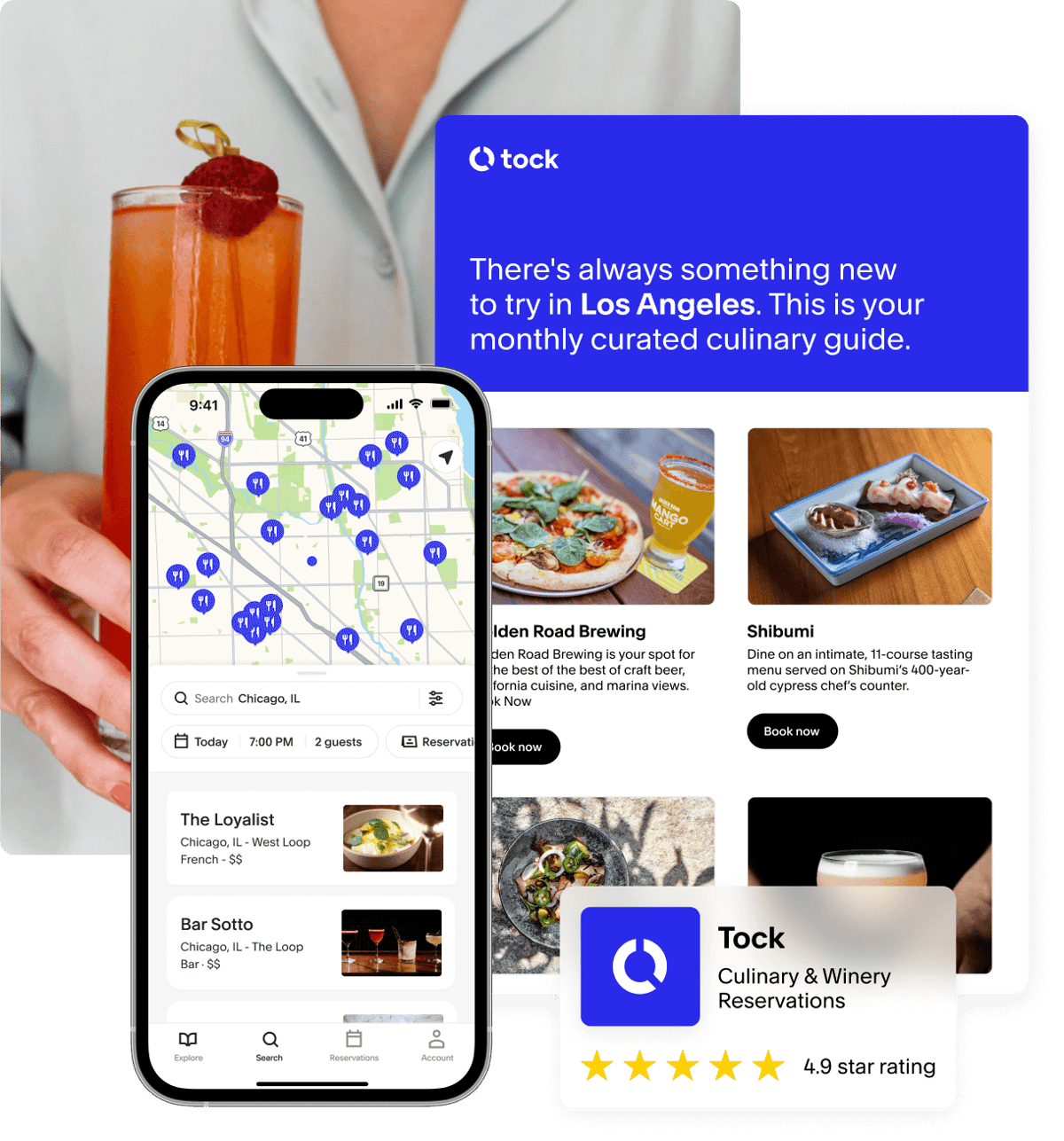
Event management is where Tock truly distinguishes itself.
Restaurants can design event-specific landing pages, offer priority access to high-value guests, issue QR-code tickets, and manage prepayment workflows from a single dashboard.
Of course, all this ties in with their discovery platform.
Source: Tock
While Yelp supports reservations and limited guest management, it doesn’t provide this type of comprehensive event-driven infrastructure.
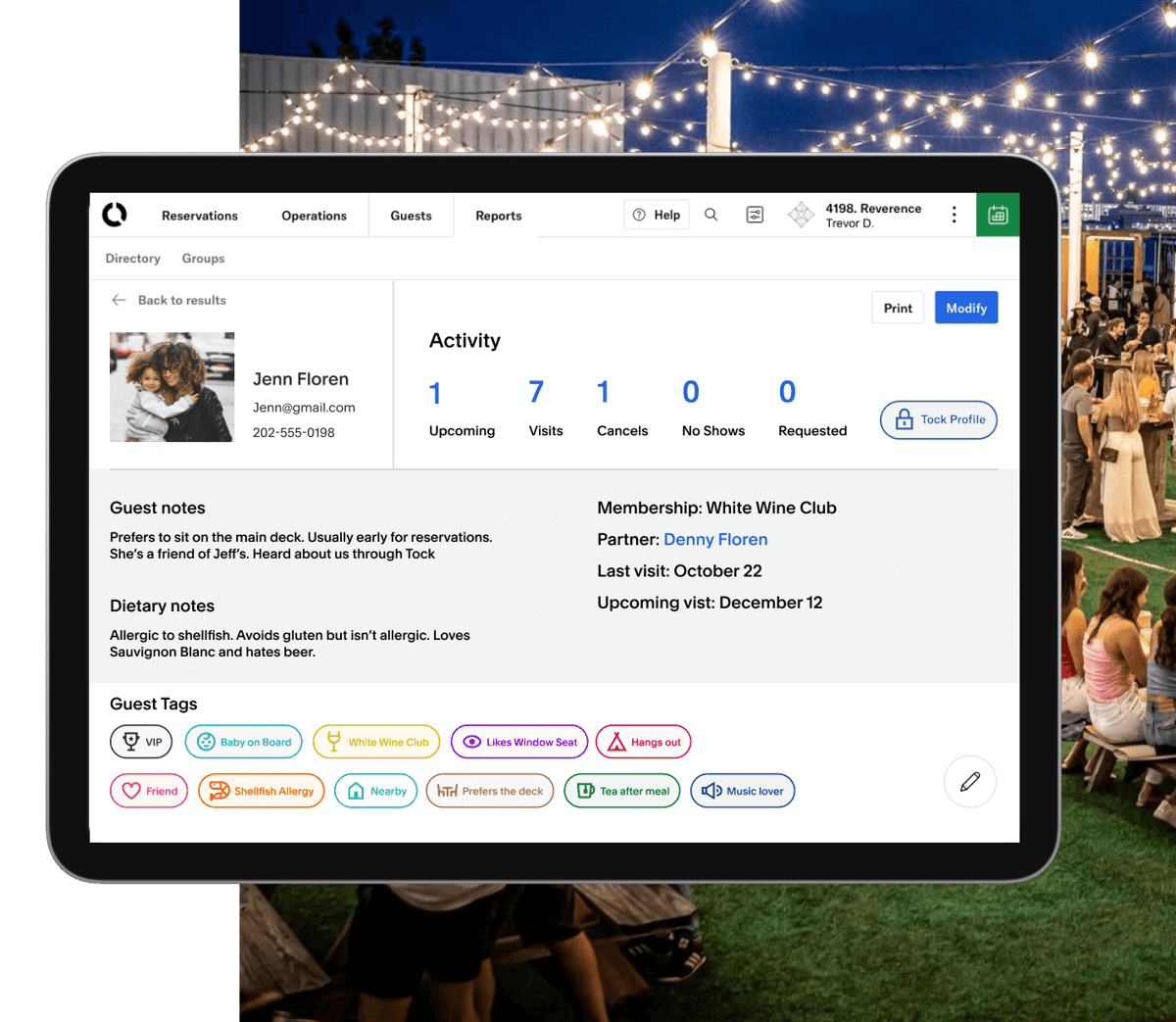
Tock’s mobile app also streamlines on-site operations with quick access to prebookings, tags, guest notes, and profile details.
Because Tock is oriented toward high-touch hospitality, it emphasizes rich guest data.
Think color-coded tags, detailed visit histories, as well as segmentation features that help restaurants identify trends and nurture repeat diners.
Source: Tock
However, some reviews on platforms like Capterra and G2 indicate that the system’s power can come with a learning curve.
One user in particular mentioned difficulties with managing reservations, noting that the backend experience feels less intuitive compared to the guest-facing side.
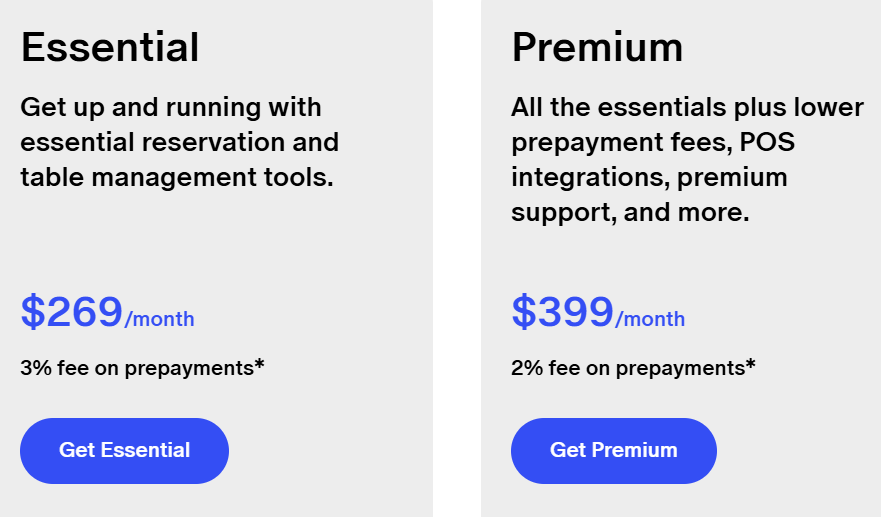
Tock is also one of the pricier solutions on this list, offering no free trial and starting at $269 monthly for a one-year plan.
Source: Tock
However, all core and advanced offerings are included in the Essential plan, which means you’ll only need to pay extra for more targeted guest experience, POS integrations, and API access.
While less accessible for small independent restaurants, Tock is a strong match for high-end venues and multi-concept operations looking for a more experiential alternative to Yelp.
Conclusion
Choosing the right reservation system comes down to how your restaurant operates day to day.
While Yelp offers strong visibility, purpose-built tools often provide better control, clearer workflows, and more flexibility.
Some platforms focus on discovery, others on operations, analytics, or guest experience.
The key is identifying what matters most to your team and your guests.
Test a few options, involve your staff, and prioritize ease of use. After all, the right system should support service, rather than complicate it, helping your restaurant grow with confidence.
Share this

ResOS Alternatives for Smooth Restaurant Reservations

Restaurant Table Management Software: Top 5 Options
