
Key Takeaways:
-
Short-form video is the most powerful format for restaurant discovery.
-
Authentic, behind-the-scenes content outperforms polished ads.
-
40% of diners say influencer reviews affect where they choose to eat.
-
Social media should be connected to reservations so guests can easily move from discovery to booking.
In 2026, a restaurant's social media strategy is no longer a side project.
It is a direct line to new customers and a primary driver of your dining room's success.
With competition fierce and diners making decisions based on what they see online, your digital presence must be strategic.
The following five social media marketing trends are crucial to reaching the modern diners, driving engagement, and filling your tables.
Let’s explore them in more detail.
Short-Form Video Content
Nowadays, short-form video is the most effective channel that restaurants have access to.
TikTok videos, Instagram Reels, and YouTube Shorts are attention-grabbing right from the start.
In fact, 69% of consumers prefer video to other content when learning about a product or service.
This format is designed for discovery, putting your content in front of potential customers who don't yet follow you.
For restaurants, this means a 15-second clip of a pan sizzling, a chef's hands plating a dish, or a guest's first bite can effectively stop the scroll.
These are raw, visually engaging clips that spark interest and drive shares.
And, according to the 2025 State of Restaurants report by TouchBistro, 48% of restaurant operators now use TikTok, up from 26% in 2023.
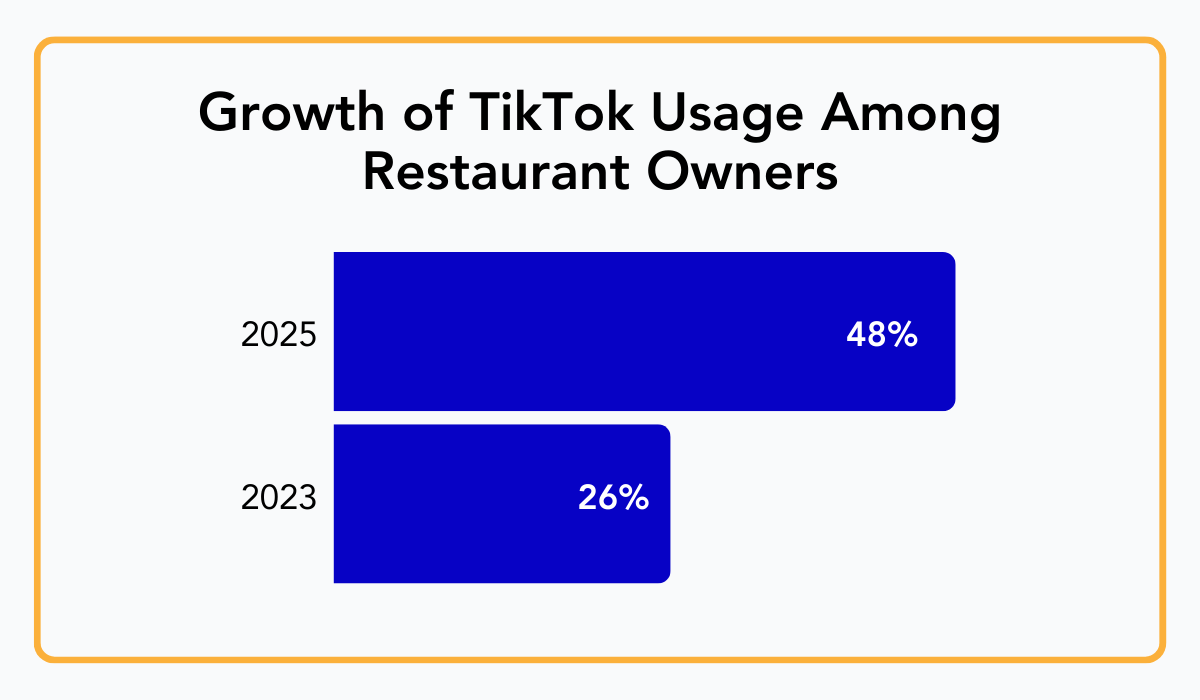
Illustration: Tablein / Data: TouchBistro
This means one thing: restaurants are increasingly recognizing the value of short videos.
Wondering how you can hop on the trend, too?
Start by posting at least one video per week and keep it real, rather than trying to be perfect.
You don't have to have a story or a finished script. You need movement, sound, and a moment that feels real.
Many owners overthink this because they believe short videos require expensive production.
But the truth?
Some of the most viral videos have been taken on mobile phones, in natural light, during a service.
Sometimes it is better to have simple videos than staged advertisements.
The audience will respond to quick, genuine glimpses into your restaurant's personality.
Here are some simple ideas that work:
-
A 10-second video of a burger being made from start to finish
-
The chef preparing the same meal three times in rapid shots
-
A server pouring wine as the dining room fills with noise
-
A reaction from a guest trying one of your dishes for the first time
These raw and very eye-catching clips inspire people to share.
According to Sprout Social's 2024 Social Content Strategy Report, consumers say short-form video is the most engaging type of in-feed content and the format they want brands to post most often.
As you get the hang of it, try to post 1–3 short videos per week and aim for videos between 7 and 30 seconds, using strong hooks and trending sounds to grab attention instantly.
Frank DePino, Principal and Founder of Mediaboom, a hotel marketing agency, notes that Instagram Reels and TikTok videos under 60 seconds have the greatest impact on social media.
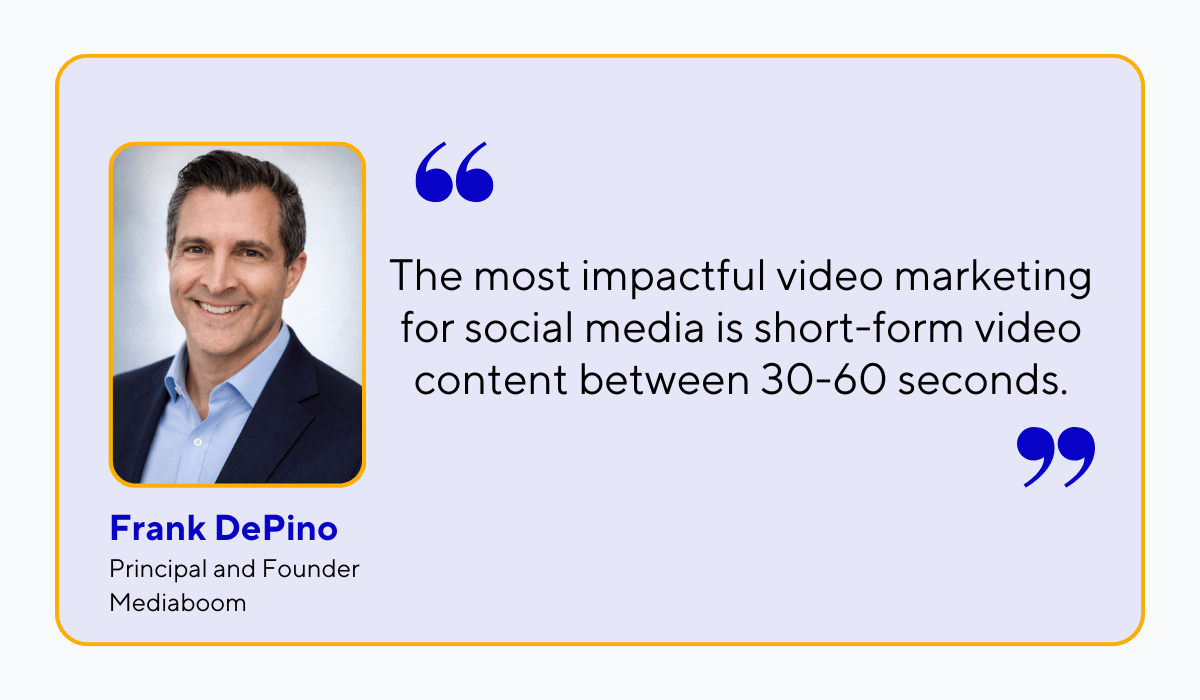
Illustration: Tablein / Quote: Revfine
This length is ideal for catching immediate attention and promoting engagement.
Focus on authenticity over perfection and remember that consistency matters more than polish.
By posting these short clips consistently, you ride the social algorithms that favor video.
When done right, each clip can reach thousands of potential customers who discover your restaurant through the "For You" feed.
Relatable Content Over Polished Ads
Now here's the shift many restaurants overlook: highly polished, ad-like posts are becoming less effective.
Why?
Because today's diners crave realness. They trust behind-the-scenes moments and user content far more than glossy ads.
In fact, 92% of people say they trust individual recommendations over brand advertising, meaning they will respond more favorably to information that is perceived as authentic and unscripted.
They want to see the people behind the food and want context, not commercials.
Therefore, in addition to posting food photos from a professional perspective, you should also show the human side of your restaurant.
That’s because trust drives visits.
A survey conducted by Toast reveals that, while 84% of guests want to see photos of food and drinks, a substantial portion also wants to see your decor and videos that showcase the dining experience.
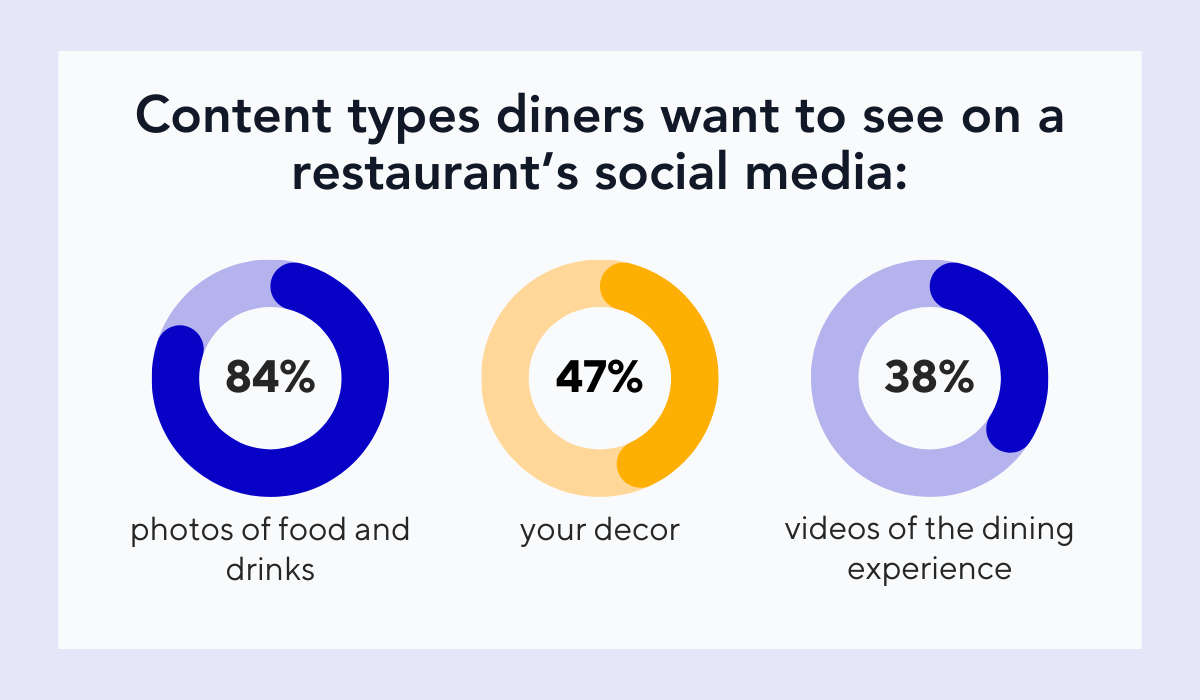
Illustration: Tablein / Data: Toast
But what does relatable, authentic content look like in practice?
Some common examples include:
-
A server sharing what it's like to work on a Friday night
-
A chef reacting to the most-ordered dish of the week
-
A brief BTS clip of the prep work done before the restaurant is opened
-
A candid staff moment during a busy service
The reason that these posts are so effective is that they depict reality.
However, it is essential to remember that relatable does not necessarily mean reckless.
This trend is all about striking a balance between professionalism and personality. Yes, you still want good lighting and clear audio, but you don't need a studio setup.
The key to this balance?
Being able to exhibit personality without compromising standards.
It is the difference between a sterile photo of a perfect burger and a short video of a chef explaining why they source a particular local cheese.
Hospitality brands performing best on social media are leaning into behind-the-scenes content that highlights staff, process, and everyday moments.
The family behind the Susur Lee Restaurant Group understands this well.
The father-son duo, Susur Lee and Jet Bent-Lee, amassed a following across social media platforms with their authentic, fun video content.
Bent-Lee highlights the result of focusing on the relatability of their content:
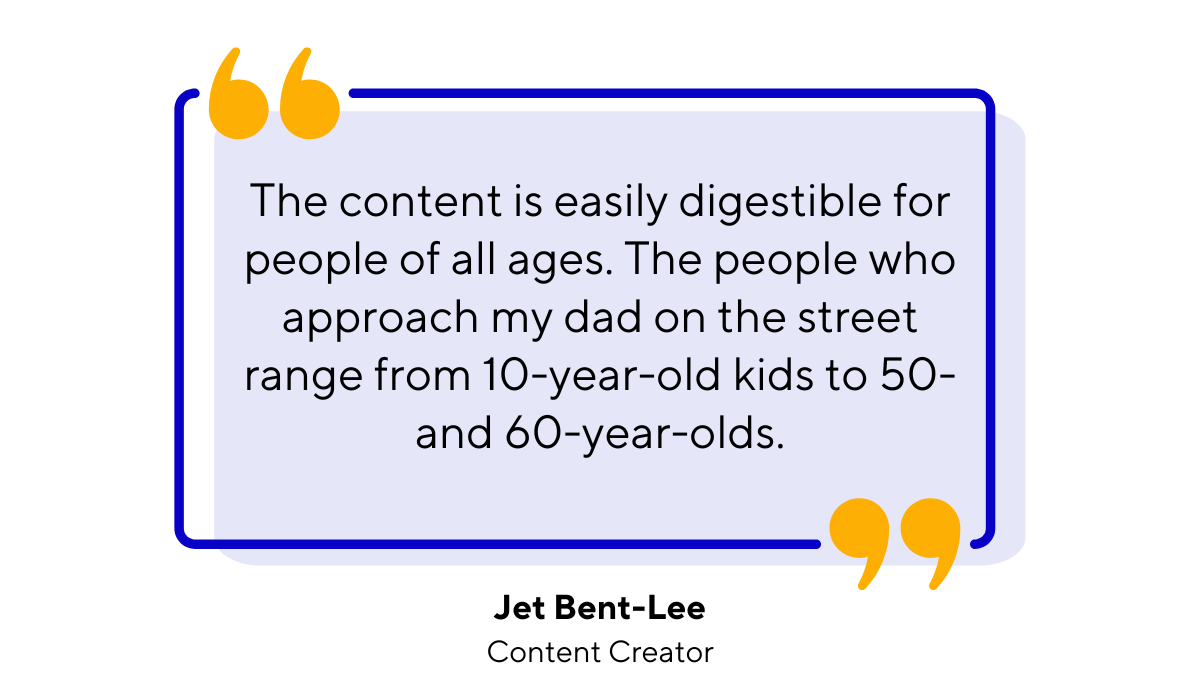
Illustration: Tablein / Quote: View the Vibe
And that’s what it’s all about, really: creating content that resonates with everyone.
The bottom line?
People want to see the humans behind the hospitality: the laughs, the hustle, the little imperfect moments that make your place feel alive.
So, show your personality, not just your plating.
Partnering with Local Creators
Traditional influencer marketing is slowly becoming less effective for restaurants.
Sure, big celebrity influencers can bring eyeballs, but local micro-influencers bring diners.
And it makes sense, really.
A local food blogger with a few thousand followers in your city often has high credibility with nearby fans.
This is because proximity matters.
Local food bloggers, neighborhood creators, and micro-influencers speak directly to the people most likely to visit your restaurant.
Their followers live nearby, they dine locally, and they trust recommendations rooted in their community.
Neal Schaffer, a Digital Marketing Strategy Consultant, observes that a major benefit of partnering with creators is the ability to target those whose followers match your ideal customer profile.
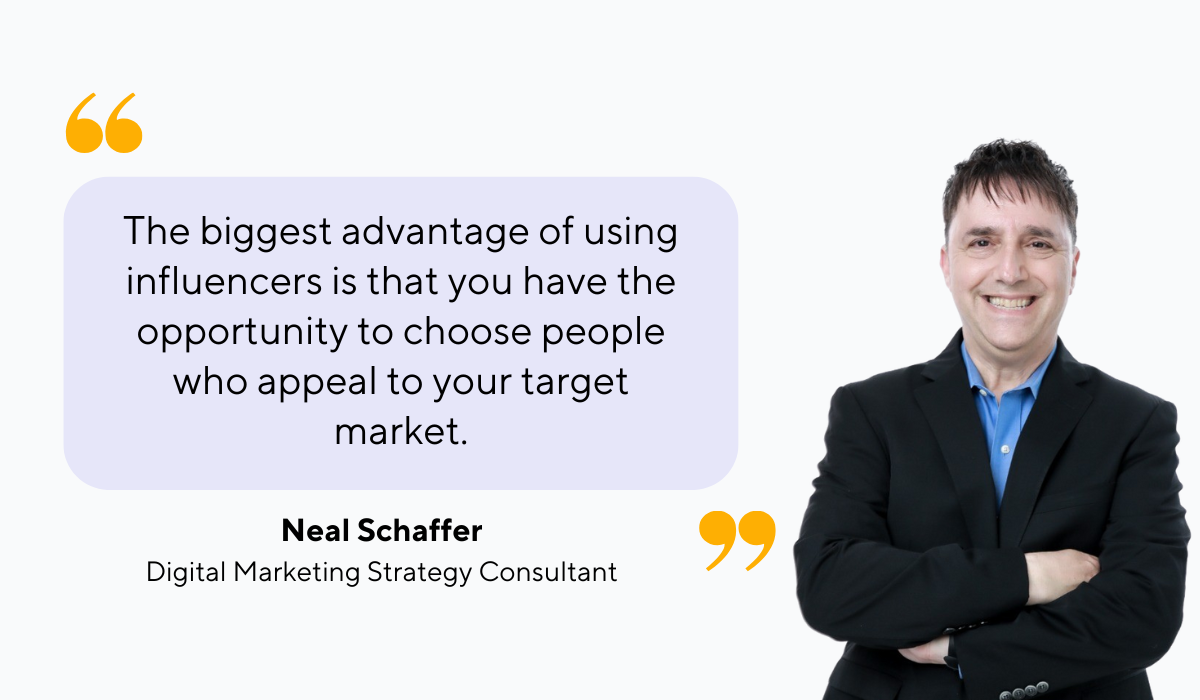
Illustration: Tablein / Quote: Neal Schaffer
This strategic alignment ensures your message reaches an audience already primed to engage with your restaurant.
Plus, according to a Toast survey, 40% of diners said an influencer's review would influence where they chose to eat.
So, how should you approach partnerships?
Start small.
Invite a nearby food writer or Instagram foodie for a tasting, and offer them a complimentary meal in exchange for an honest review or story.
Once it’s up, don’t forget to ask permission to share their content on your channels. Always tag them and credit their handle so their audience sees the connection.
This cross-posting is a win-win: they get content, you get exposure.
Here are a few more best practices to consider:
-
Review a creator's past content. Do they feature restaurants like yours? Is their audience local? Are their comments genuine and engaged?
-
Offer an experience, not just a meal. Invite them for a kitchen tour with the chef, a preview tasting of a new menu, or a seat at a special event.
-
Be clear about the deal. Tell them what you expect (e.g., one Instagram post and story) and what you will provide (a meal, drinks, or gift card).
-
Use local hashtags. Tag neighborhood locations (e.g. #NewYorkEats) to boost discovery among locals.
Want to take it a step further?
Host a creator night by inviting several local bloggers at once and letting them experience the space, the service, and the food in a natural way.
The content that follows often feels more genuine and varied.
Remember, authentic voices promote restaurants better than brand-owned content alone. When locals talk, others listen.
Multi-Channel Engagement Across the Customer Journey
Here's a reality check: most diners do not book a table on the first interaction.
A potential diner may discover you through a TikTok or an Instagram Reel, check your ambiance and Google reviews, and finally visit your website to view the menu and make a reservation.
Many users review menus, ratings, and photos across different platforms before booking.
This means that experiencing no friction between discovery and reservation is essential.
In other words, if someone loves your Instagram story, they should be able to book a table with a click.
This is where Tablein fits perfectly into your strategy.
Using Tablein's integration capabilities, you can easily add a "Book Now" button on Facebook and Instagram.
This adds a handy Reserve action right on your profile.
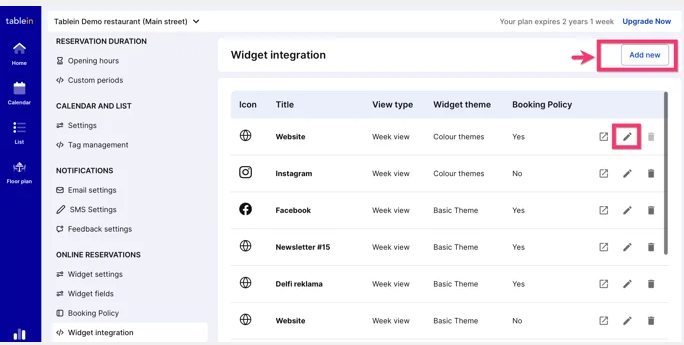
Source: Tablein
You can also use the platform's widget link in your Instagram bio or TikTok profile so that a single tap takes customers straight to a reservation form.
Even a short link in a story (e.g., "Click here to book a table") can capture bookings.
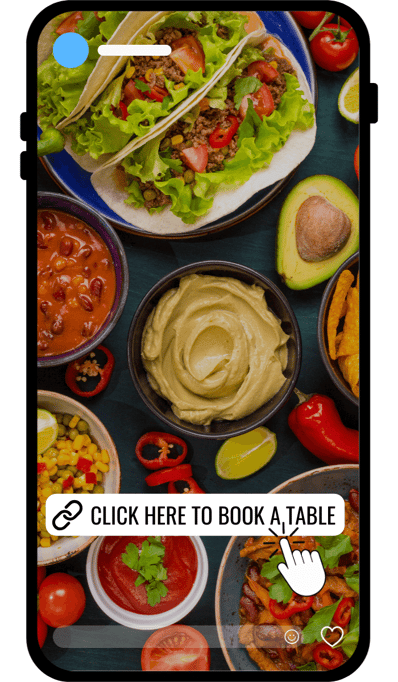
Illustration: Tablein / ©thesomegirl via Canva
The goal is to be consistently present, guiding potential guests from inspiration to reservation with minimal friction.
Sp, treat social media as interconnected, not separate.
In your customer journey, social media should be at the "awareness" stage (catching interest on feeds), while your website or app should be at the "decision" stage (allowing customers to book).
In short, minimize the number of steps it takes to get from one stage to the next.
When your booking system is connected across channels, social media becomes a revenue driver instead of just a branding tool.
In other words, your social content starts filling tables instead of just collecting likes.
The Growing Use of AI
Finally, let's talk efficiency.
Restaurants are using AI more than ever to stay active online.
A global survey by SevenRooms shows high adoption rates, with 79% of U.S. operators leveraging AI in some way.
For small teams, AI saves precious time on administrative tasks, freeing you to focus on hospitality and creative strategy.
AI can help draft captions, suggest hashtags, schedule posts, and even analyze what content works.
Globally, restaurants use AI primarily for marketing, data analysis, customer service, scheduling, and inventory management.
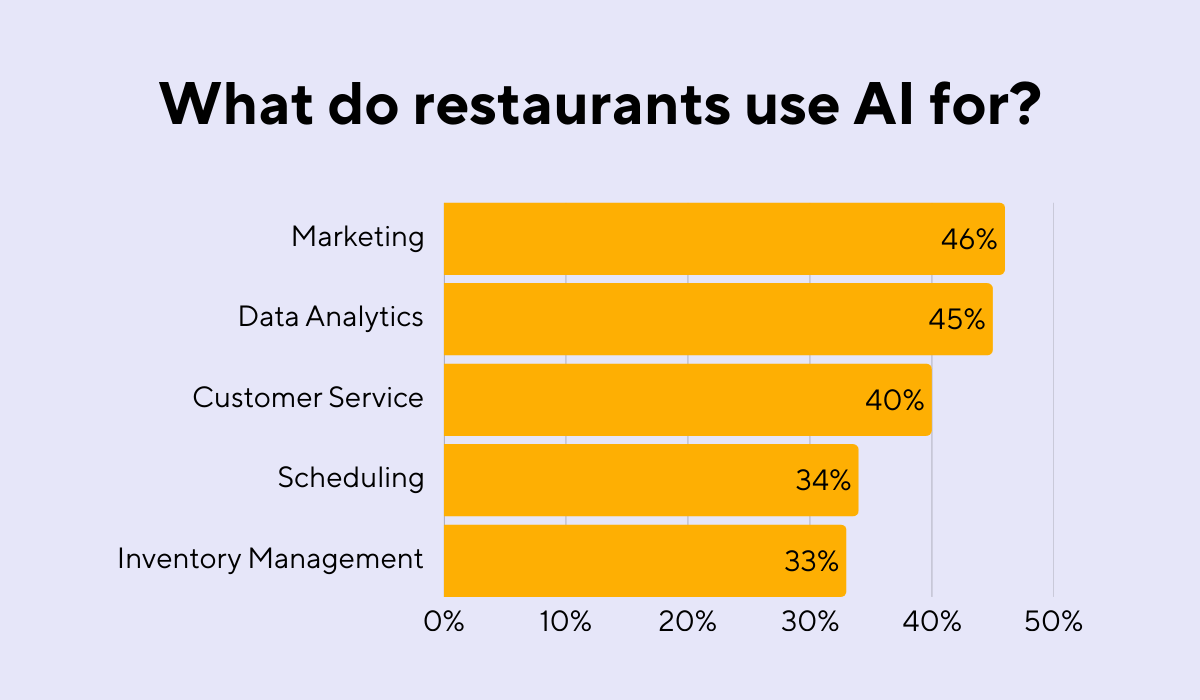
Illustration: Tablein / Data: SevenRooms
And these figures don’t come as a surprise.
After all, AI is a support tool that can handle repetitive work, giving your team a foundation to build on with human warmth and brand personality.
AI tools like ChatGPT, Canva Magic Write, and scheduling platforms like Buffer can help you stay visible without daily effort.
For example, you might use AI to write a first draft of a social post or to schedule a week of content at once.
Scheduling tools let you queue posts for the coming days so you won't have to scramble every afternoon.
That said, AI works best when it supports your voice, not replaces it.
Use AI for fresh ideas or to analyze which posts gained the most engagement, but keep final edits human.
Generic captions and recycled phrases undermine authenticity, as hospitality depends on tone and nuance.
Experts in hospitality marketing stress that AI is best used as a brainstorming and efficiency tool, not a creative decision-maker.
Even Adam Mosseri, Head of Instagram, warns that authenticity is becoming infinitely reproducible thanks to the rise of AI.
Therefore, he explains, social media success depends on whether you’re able to preserve a genuine, human voice while navigating these new technologies.
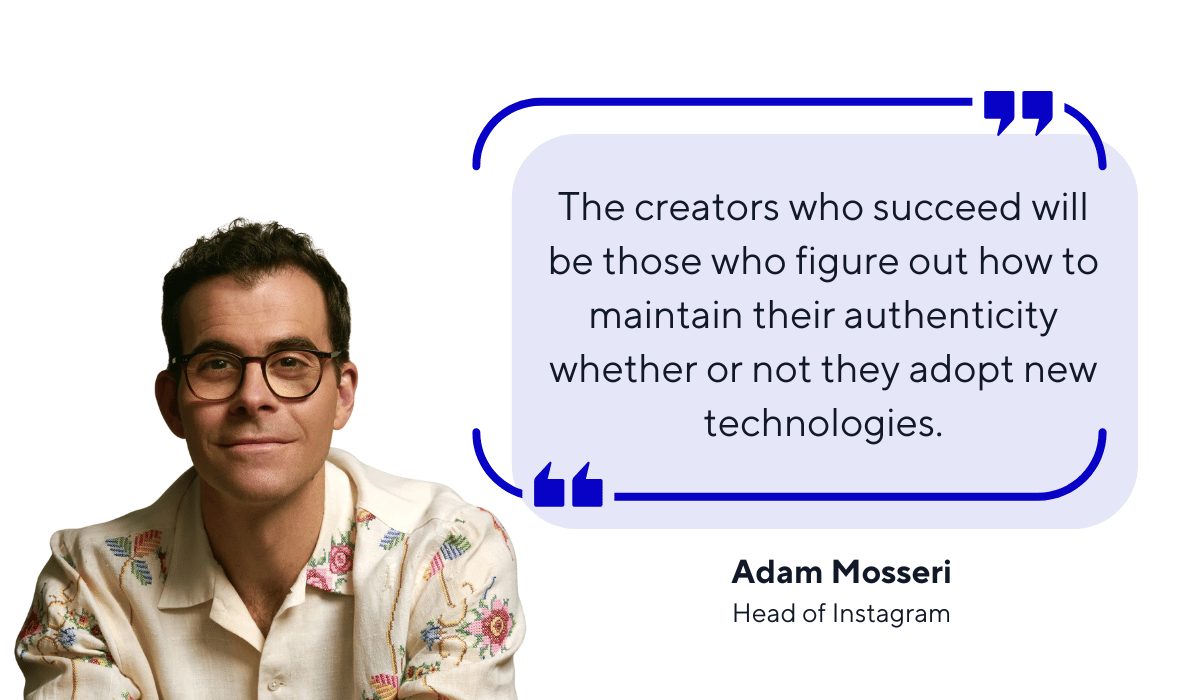
Illustration: Tablein / Quote: Music Ally
So, if you do decide to rely on the help of AI in your social media content strategy, always check that AI-generated text sounds like your brand voice.
By combining AI efficiency with your unique brand style, you can post more often and keep guests engaged without adding stress.
This balance ensures your brand remains consistent while preserving your personality.
Conclusion
With these five trends, your restaurant will stand out online and convert followers into diners.
But don’t feel the pressure to hop on every single trend at once.
Instead, pick one and try it today.
Maybe post a quick cooking clip or tag a neighborhood foodie in your next post.
Each step you take ties into filling more seats.
Embrace these strategies, and soon you'll see your social channels turning curiosity into reservations.
Share this
5 Benefits of Social Media Marketing for Restaurants

6 Commonly Overlooked Costs of Restaurant Marketing